Introduction
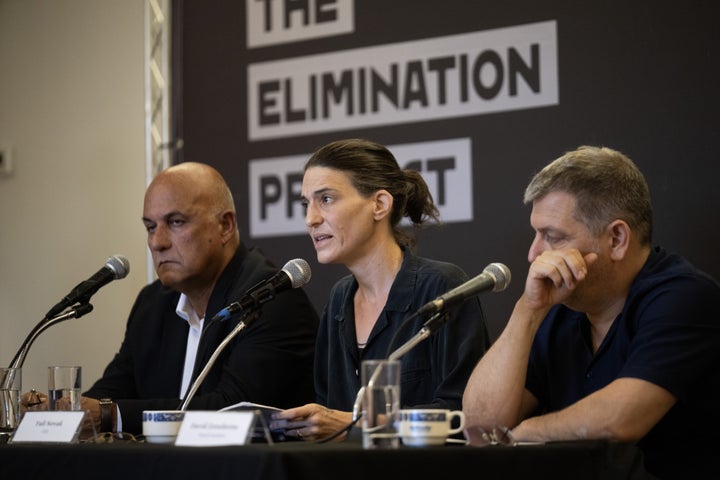
The Israeli human rights organization B'Tselem has just released a sweeping 245-page report titled Elimination Project arguing that Israeli policies and practices across both official and unofficial channels amount to a coordinated campaign to remove Palestinians from the West Bank. The report frames the situation not as a series of isolated violations but as a systematic mechanism designed to erase Palestinian presence and enable expanded settlement activity.
What Happened
Since the October 2023 attacks, violence in the West Bank has intensified dramatically, with B'Tselem recording at least 1,100 Palestinian deaths, the forced displacement of dozens of communities, and the demolition of thousands of structures. The report documents a five-pronged strategy: violence and intimidation, movement restrictions, economic strangulation, social and political destruction, and ethnic cleansing coupled with territorial takeover. Through testimonies from nearly 2,000 Palestinians, the group illustrates how home demolitions, checkpoints, settler militias, and land seizures have become daily realities. The report also notes that nearly 200 new movement obstacles have been imposed and hundreds of thousands of dunams of agricultural land have been seized.
Why This Matters
B'Tselem's findings have already reshaped the discourse, with the group joining Amnesty International in labeling the situation apartheid and ethnic cleansing, while the International Court of Justice has deemed the occupation illegal. The report's release coincides with a pivotal election in Israel, heightened international scrutiny, and ongoing condemnation from several Western nations. Western responses have been mixed: the UK has imposed a settlement trade ban and labeled settler violence as ethnic cleansing, while the U.S. administration has continued strong support for Israel, even lifting sanctions on violent settlers. The report aims to push the global community toward accountability at a moment when the stakes have never been higher.
Key Takeaways
- B'Tselem's Elimination Project frames Israeli actions as a unified campaign rather than random violations.
- The report documents at least 1,100 Palestinian deaths in the West Bank since October 2023, alongside 64 forcibly displaced communities and nearly 2,800 demolished structures.
- Five interconnected strategies—violence, movement restrictions, economic pressure, social erosion, and territorial takeover—form the core of the alleged elimination mechanism.
- International reactions are divided, with some nations imposing bans and labeling the situation apartheid, while major allies continue military and political support.
- The findings emerge amid Israel's first election since the October 2023 escalation, making the outcome potentially consequential for future policy and international relations.
Conclusion
The report ultimately argues that Palestinian rights to liberty, equality, and collective existence cannot be subject to the discretion of the occupying authority. Without sustained international pressure, the patterns of displacement, confinement, and institutionalized control are likely to persist. B'Tselem's work serves as both a documentation of current realities and a call for accountability, urging the world to recognize the situation not as separate incidents but as a coordinated campaign with far-reaching consequences.



Discussion
Join the conversation
Thoughtful reactions, questions, and follow-up ideas help shape the next story.