Introduction
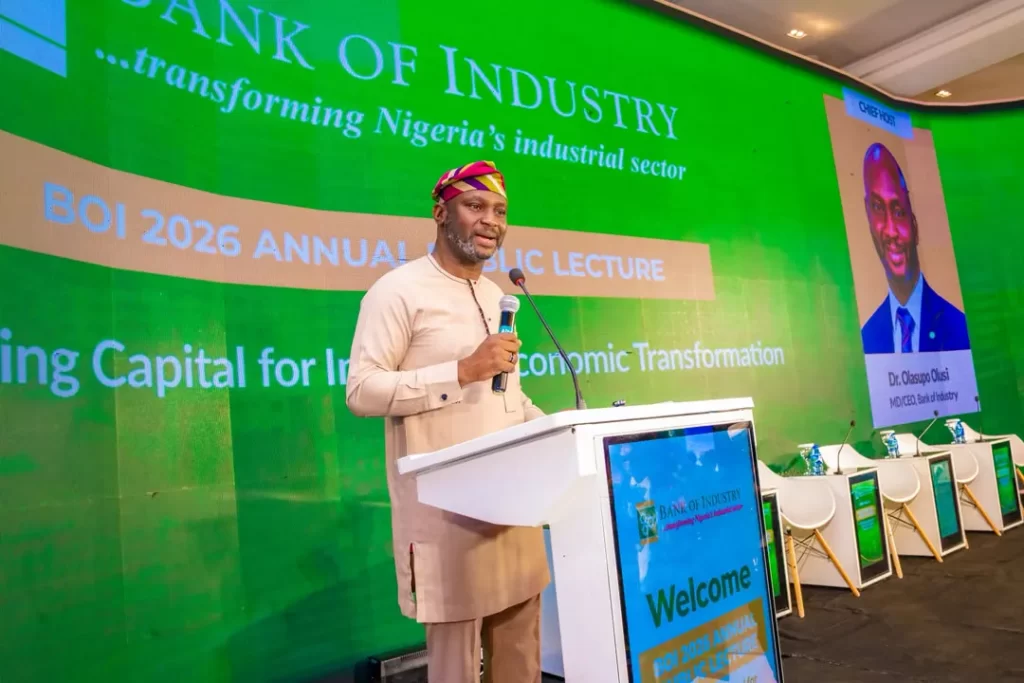
The Bank of Industry convened its third Annual Public Lecture in Abuja on September 29, 2026, gathering policymakers, financiers, manufacturers, and development experts. Centered on rethinking capital for inclusive economic transformation, the event examined how long-term funding can be mobilised and deployed more effectively to strengthen Nigeria’s industrial base.
What Happened
Dr Olasupo Olusi, Managing Director and Chief Executive Officer of the Bank of Industry, opened the session by stressing that development finance must reach underserved businesses while encouraging private investment in productive sectors. He disclosed that the institution disbursed ₦645 billion during 2025, supported more than 12,000 enterprises, and contributed to 1.68 million jobs.
Dr Asad Alam, a former World Bank director and adjunct professor at Georgetown University, delivered the guest lecture. He argued that higher investment volumes must be matched by stronger productivity, better education and skills, innovation, and reliable institutions. He also pointed to technology and climate-focused investment as drivers of economic change, provided they are supported by sound policy.
A panel featuring the Manufacturers Association of Nigeria, InfraCredit, the Policy Innovation Centre, and Flour Mills of Nigeria discussed barriers to finance. Representatives called for wider access to affordable credit, longer loan tenures for manufacturers, and greater attention to rural communities and underserved women. Dr Tope Fasua, Special Adviser to the President on Economic Affairs, added that knowledge, technology, and investment in power, logistics, and infrastructure remain critical to national development.
Why This Matters
The discussion comes at a time when Nigerian businesses continue to grapple with high borrowing costs and limited access to patient capital. By linking the volume of disbursements to tangible outcomes such as employment and enterprise growth, the Bank of Industry is signaling a shift toward measuring development finance by real economic impact rather than disbursement figures alone.
Key Takeaways
- The Bank of Industry disbursed ₦645 billion in 2025 and supported over 12,000 businesses.
- Lecture participants emphasized that inclusive growth must extend benefits beyond a narrow group of enterprises.
- Panelists urged broader access to affordable, long-term financing for manufacturers and underserved groups.
- Experts identified productivity, skills, innovation, technology, and infrastructure as essential foundations for industrial transformation.
Conclusion
The 2026 lecture reinforced the Bank of Industry’s ongoing commitment to shaping Nigeria’s development agenda through dialogue and targeted finance. As stakeholders continue to push for cheaper, longer-term capital, the event highlighted a shared view that sustainable industrial progress depends on both the quantity and quality of investment.
Discussion
Join the conversation
Thoughtful reactions, questions, and follow-up ideas help shape the next story.