Introduction
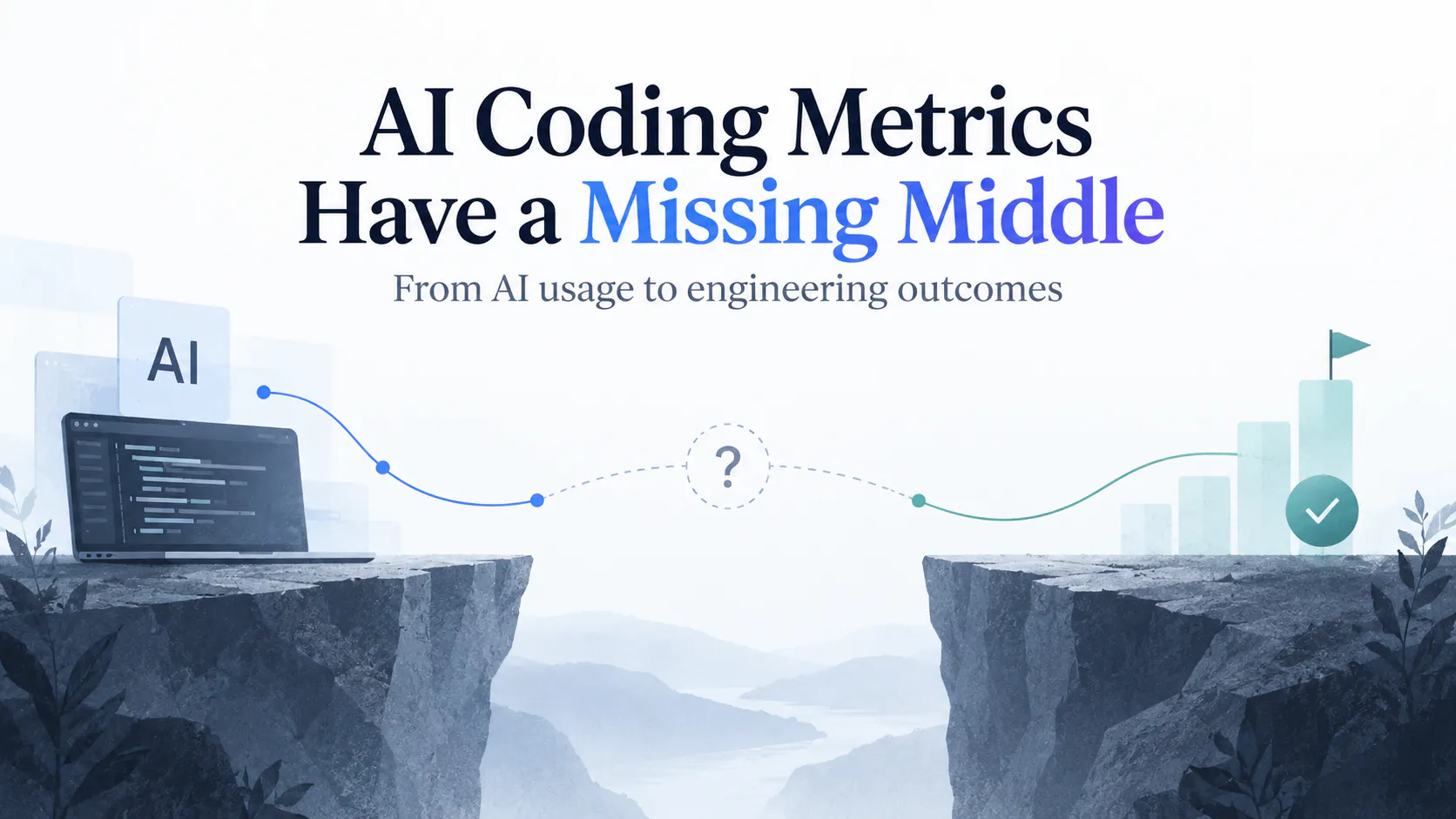
AI coding metrics have exploded in recent years, yet a critical gap persists between tracking tool adoption and understanding real system impact. Leaders can quantify how many developers are using AI assistants, which tools they prefer, and how many suggestions are accepted—but they often miss what happens to the code after it's generated. The critical gap between AI-assisted creation and software delivery is where the most important productivity questions now live.
What Happened
The rapid rise of AI-assisted coding tools like GitHub Copilot, Cursor, and Claude Code introduced new measurement possibilities. Teams can now track prompts, accepted suggestions, token usage, and AI-assisted commits. However, most dashboards stop at generation, leaving the journey from AI-generated code to production unmeasured. The article explores how organizations first needed basic adoption answers—who's using it, which tools, acceptance rates, cost—but these only address rollout, not whether the investment delivers real engineering outcomes.
Why This Matters
Speeding up one stage of software delivery can create unexpected downstream effects. A 30% reduction in coding time may be offset by longer review cycles, larger pull requests, or increased rework. Without measuring the full pipeline, organizations risk optimizing the wrong metrics and missing genuine productivity gains. The piece argues that local productivity improvements do not necessarily translate into system-wide benefits, especially when the bottleneck shifts to another stage.
Key Takeaways
- AI adoption does not equal system-wide productivity improvement.
- Local gains in one stage can create bottlenecks elsewhere in the engineering funnel.
- Attribution without outcomes is just activity tracking, not meaningful measurement.
- Team-level analysis reveals more than individual or company-wide averages.
- Every speed metric needs a balancing counter-metric to prevent unintended consequences.
- The focus must shift from counting AI-assisted artifacts to understanding where engineering effort moves and how delivery outcomes change.
Conclusion
The central question has shifted from whether AI can write useful production code to what happens to the engineering system when AI becomes a normal development participant. Measuring AI impact requires connecting attribution data with delivery outcomes, identifying where work moved, and adjusting the system accordingly. The missing middle is where the most important insights now live, and connecting AI metrics with engineering outcomes is the only way to understand true impact.



Discussion
Join the conversation
Thoughtful reactions, questions, and follow-up ideas help shape the next story.