Introduction
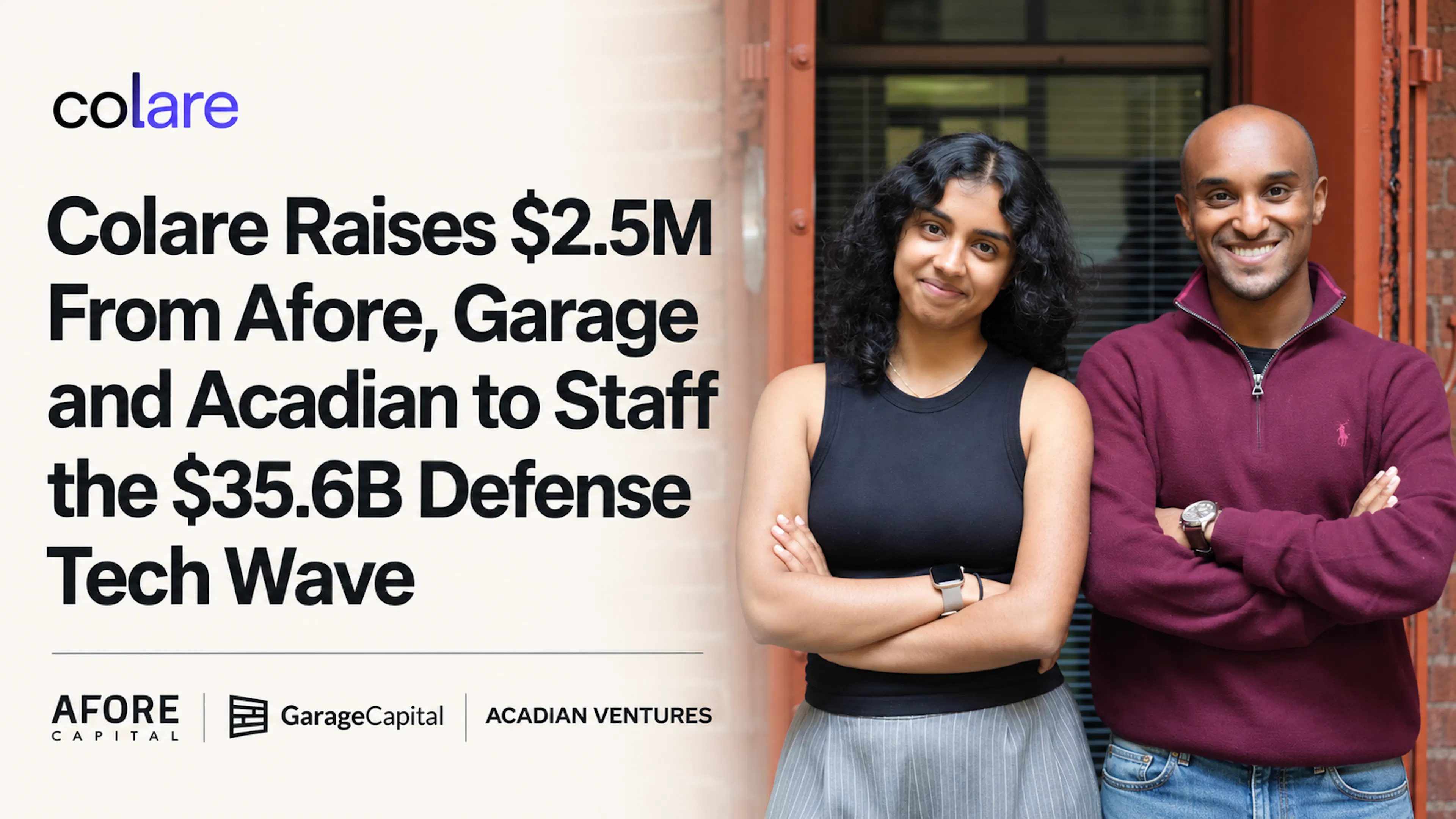
Colare, a San Francisco-based startup, has emerged from stealth with $2.5 million in pre-seed funding to address a pressing challenge in defense and hardware hiring.
What Happened
The company launched publicly with simulation-based assessments that allow candidates to solve realistic engineering problems in tools like CAD, PCB design, and thermal analysis before any interview is scheduled. About half of Colare's early clients operate in aerospace and defense. The funding round included Afore Capital, Garage Capital, and Acadian Ventures, marking the company's entry into a market where talent scarcity meets rapid growth.
Why This Matters
Defense tech venture deal value hit $35.6 billion in the first half of 2026, with total 2025 deals surpassing $49 billion. A severe hiring bottleneck looms: senior engineers reportedly spend about 40 hours per hire, and a single company adding 50 monthly openings could spend up to 2,000 hours on recruitment if every role follows the full process. With the global space economy exceeding $686 billion and manufacturing projected to need 3.8 million new workers by 2033, the pressure to identify skilled engineers quickly has never been higher.
Key Takeaways
- Colare's platform maps job descriptions to simulations covering mechanical, electrical, firmware, embedded, controls, thermal, test, and reliability roles, and integrates with existing applicant tracking systems.
- Assessment rubrics are built by senior engineers who have shipped hardware, translating intuitive screening into scalable signals across hundreds of candidates.
- AI-enabled fraud in hiring, highlighted by the Greenhouse 2026 report, makes reliable skill assessment more urgent, since resumes and interview answers can be inflated or assisted.
- Early customers include space startups and manufacturing subsidiaries that have used Colare to flag engineering gaps before final interview rounds, avoiding costly mis-hires.
- Long-term, the company aims to replace pedigree-based hiring with direct ability measurement, opening aerospace, manufacturing, and energy roles to engineers whose work speaks louder than their resumes.
Conclusion
With $2.5 million in fresh capital and a platform designed to turn engineering intuition into standardized assessment, Colare is positioning itself at the forefront of a hiring transformation. As defense tech and hardware sectors grow faster than traditional screening can keep up, simulation-based evaluation may become the new standard for identifying skilled engineers before the first interview even begins.







Discussion
Join the conversation
Thoughtful reactions, questions, and follow-up ideas help shape the next story.