Introduction
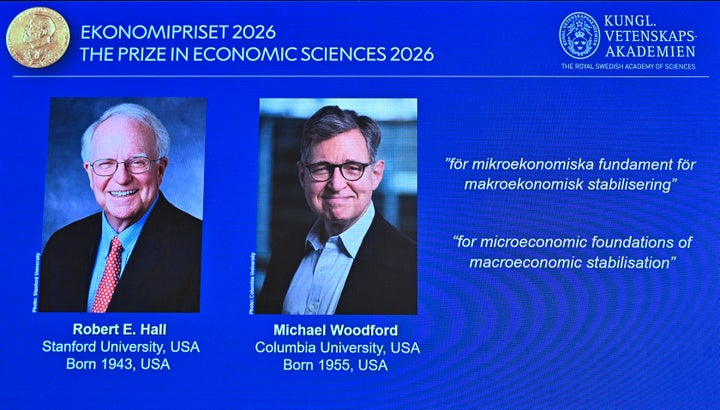
Two prominent American economists have been awarded the Nobel Memorial Prize in Economics for their pioneering work in modeling how economies respond to sudden shocks.
What Happened
The Royal Swedish Academy of Sciences announced Monday that Robert E. Hall of Stanford University and Michael Woodford of Columbia University received the honor for their research into the microeconomic foundations of macroeconomic stabilization. The academy noted their work has provided tools to smooth out the economy's peaks and troughs.
Why This Matters
Woodford, speaking by phone after the announcement, called it a 'tremendous honor' and a surprise. His research, along with Hall's, has given central banks and governments a stable theoretical foundation for managing crises such as energy spikes and abrupt changes in consumer spending.
Their models are now widely used by policymakers to design interventions that reduce volatility and protect economic stability during turbulent times.
Key Takeaways
- The prize, formally the Bank of Sweden Prize in Economic Sciences in Memory of Alfred Nobel, was established in 1968.
- Hall and Woodford's work focuses on how microeconomic behavior drives macroeconomic outcomes.
- Central banks rely on their frameworks to set policy during energy crises, inflation spikes, and consumption shifts.
- The award highlights the growing role of theoretical economics in practical governance.
Conclusion
With this recognition, Hall and Woodford join a legacy of economists whose ideas shape how nations weather financial storms. Their frameworks continue to guide real-world decision-making, offering a more stable path through uncertain economic waters.






Discussion
Join the conversation
Thoughtful reactions, questions, and follow-up ideas help shape the next story.