Introduction
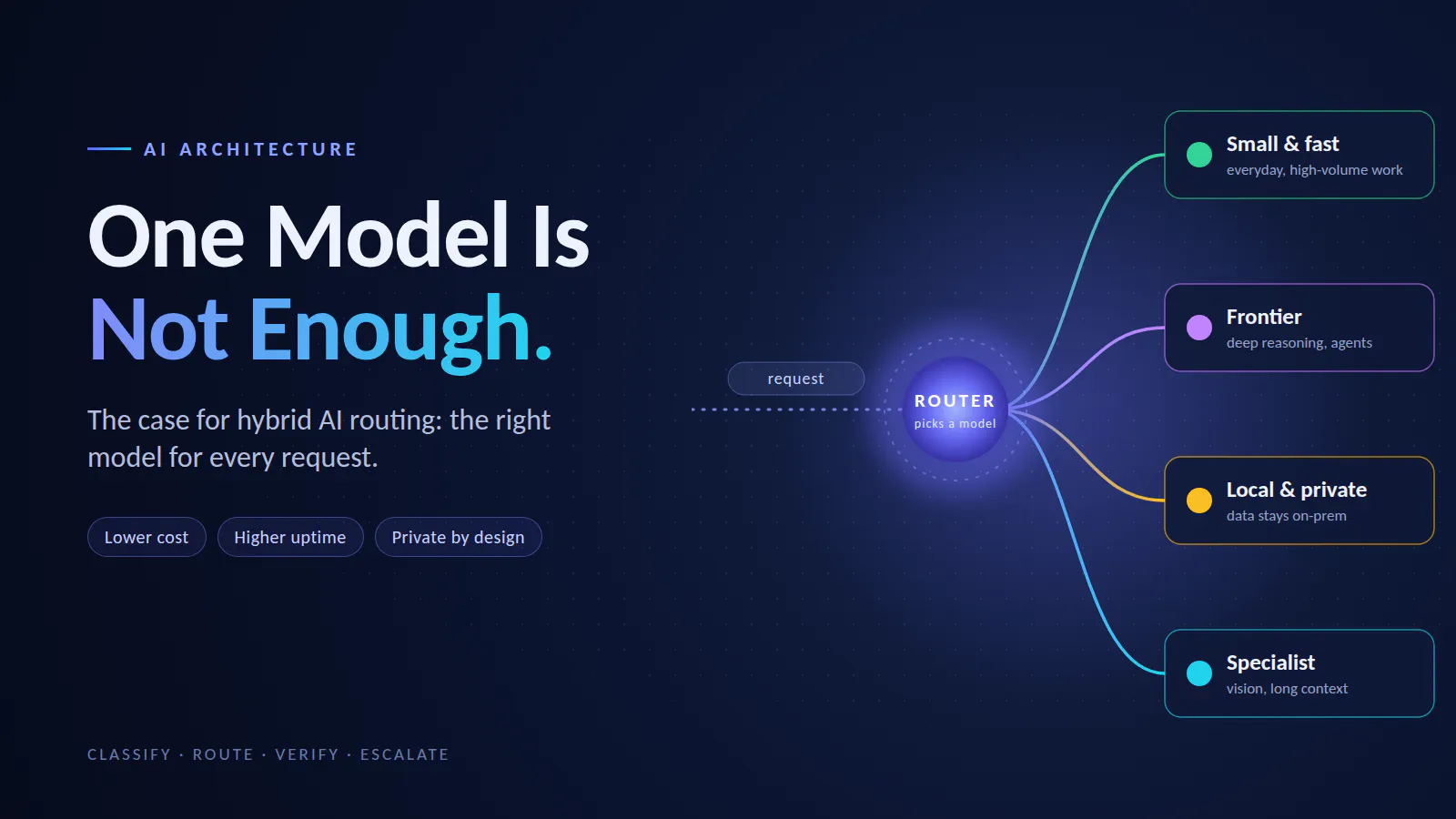
Modern AI products often route every user prompt to their most capable model, which drives up costs and creates unnecessary fragility. A hybrid AI router acts as a decision layer that matches each request to the most suitable model in your available pool.
What Happened
Many teams default to a single expensive model because it works initially, but invoices and outages soon reveal the risk. Common tasks like condensing information, pulling out key details, and sorting incoming requests dont require top-tier capabilities, yet they consume premium resources when routed universally.
Why This Matters
A hybrid router treats models as specialists. Simple requests flow to fast, cheap models. Complex or sensitive tasks reach stronger, private models. This approach lowers expenses, improves uptime, delivers better quality where needed, and eliminates vendor lock-in.
Key Takeaways
- The router evaluates complexity, features, privacy, and budget before selecting a model.
- Non-negotiable filters block sensitive data, images, and inputs exceeding context limits.
- Model pools can span multiple providers or on-prem hardware, giving full control over cost and compliance.
- Fallbacks handle infrastructure failures; cascades handle quality failures by escalating to stronger models.
- Production readiness depends on evals, observability, caching, and security controls.
Conclusion
Shifting from a single-model dependency to a hybrid routing system is measurable, low-risk, and phase-gated. Start with two models and automatic fallbacks, let your logs guide the next steps, and watch costs drop while quality stays where it matters.




Discussion
Join the conversation
Thoughtful reactions, questions, and follow-up ideas help shape the next story.