Introduction
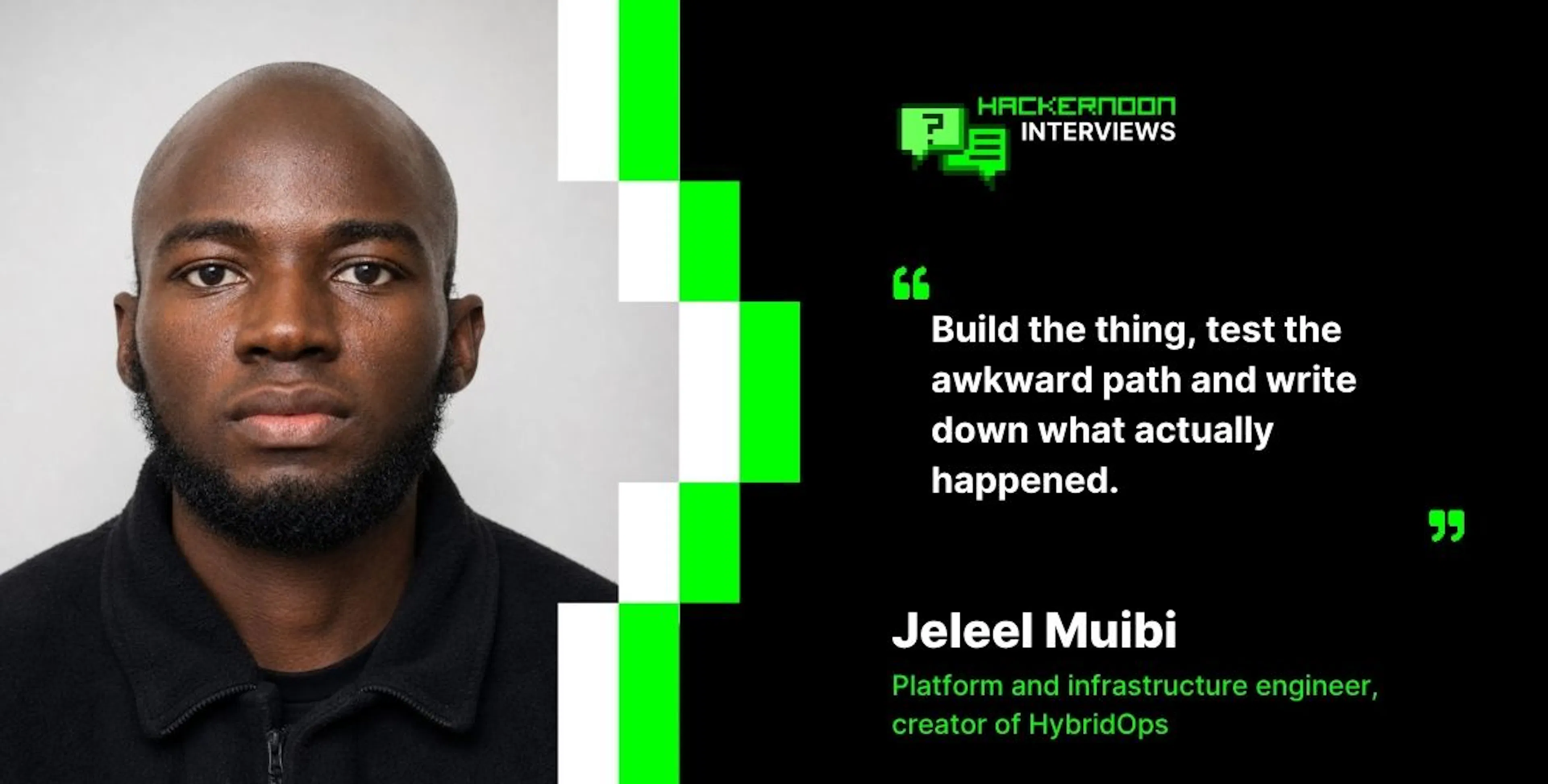
Jeleel Muibi is a platform and infrastructure engineer based in London, working at the intersection of cloud and on-premises systems. His career focuses on networking, platform lifecycle, recovery, and the controls that make operations safe to repeat. He is the creator of HybridOps, an open‑source infrastructure runtime that carries declared intent through policy, execution, verification, recovery, and teardown. Beyond engineering, Muibi writes to slow down problems and explain why systems behave the way they do.
What Happened
In a recent Hackernoon Top Story titled "The Deployment Failed. The Resources Are Still Running", Muibi explores a common yet unsettling contradiction: a deployment fails, but the network and virtual machine it created remain live. A red command signals a process stopped, but that doesn’t prove the infrastructure rolled back. The article follows the failure through state recording, pending work, recovery, and verified teardown, using HybridOps Core as the working implementation, including a regression path for partial provider mutation.
Why This Matters
Infrastructure failures are rarely isolated incidents. They often touch networking, identity, remote state, policy, and recovery all at once. Muibi’s work highlights why it matters to track what proves a result and what the next operator inherits. When automation appears complete but leaves operational questions unresolved, teams risk inheriting undocumented state. His approach brings clarity to who owns the state, what validates the outcome, and how to build systems that fail safely.
Key Takeaways
- HybridOps is an open‑source runtime that tracks intent from policy through execution to verified teardown.
- Infrastructure automation can look complete while leaving unresolved operational questions.
- Clear state ownership and proof of results are essential for operators inheriting a system.
- Writing about failures—starting with a broken test and working through the record—creates honest, useful technical narratives.
- HybridOps aims to become an established open‑source operating layer for engineers to question and improve in real environments.
Conclusion
Muibi’s closing advice sums up the article’s spirit: build the thing, test the awkward path, and write down what actually happened. In infrastructure, the failure case often teaches more than the happy path. The interview reflects how technical work gains reach when grounded in real implementation, and how platforms like HackerNoon preserve practitioner voices without flattening them into product pitches.



Discussion
Join the conversation
Thoughtful reactions, questions, and follow-up ideas help shape the next story.