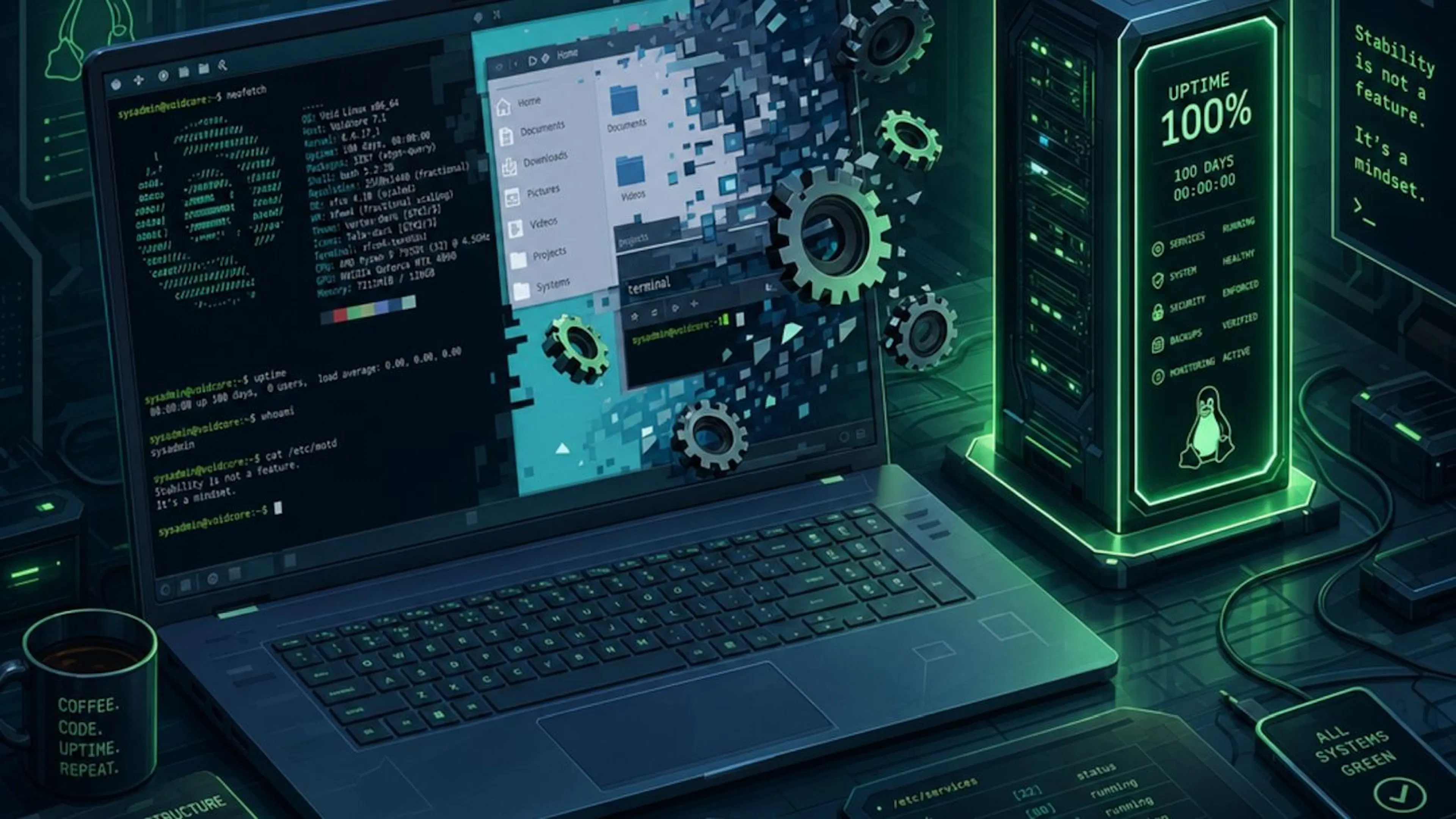
Linux has undeniably conquered the server market, powering everything from cloud infrastructure to enterprise data centers. Yet when the same open-source kernel powers a personal laptop, the experience often feels like a gamble. This article explores why the server's success hasn't translated into a seamless desktop experience, and what it would take to change that.
Introduction
Linux dominates the server room, but the desktop still feels like a high-stakes gamble for many users. Despite decades of refinement, daily usability still hinges on fragile configurations and hidden trade-offs that wouldn't be acceptable on Windows or macOS.
What Happened
The server's rise was built on stability, open standards, and enterprise trust. The desktop, however, carries a different set of expectations: instant compatibility, zero-configuration setup, and reliable hardware support. Decisions made years ago, such as the transition to Wayland, the proliferation of package formats, and the handling of power management, have created layers of complexity that users didn't sign up for.
Why This Matters
When an operating system asks users to become integration engineers just to get basic features working, screen sharing, suspend, and video playback, it ceases to be a plug-and-play experience. The gap between kernel capability and user-facing reliability matters for anyone who values time over troubleshooting.
Key Takeaways
- Wayland's architectural goals are sound, but fractional scaling and screen-sharing integration still feel conditional on specific hardware, compositors, or application builds.
- Suspend and resume reliability depends heavily on firmware, kernel flags, and driver coordination; it should not be a prerequisite for closing a laptop lid.
- Hardware video decoding should be invisible; when it requires manual edits or launcher flags, the user experience suffers.
- Package format diversity solves publisher needs but creates behavioral inconsistency, duplicated runtimes, and file-access surprises.
- GNOME extensions and desktop customizations often break across major releases, placing the maintenance burden on users rather than distributions.
Conclusion
Linux's desktop gap isn't a shortage of capable code. It is a gap in product ownership and integration prioritization. Without clear support matrices, tested upgrade paths, and coordinated hardware-software stacks, the year of the linux desktop will remain a recurring punchline. The server door is open; Linux still has to walk through it.



Discussion
Join the conversation
Thoughtful reactions, questions, and follow-up ideas help shape the next story.