Introduction
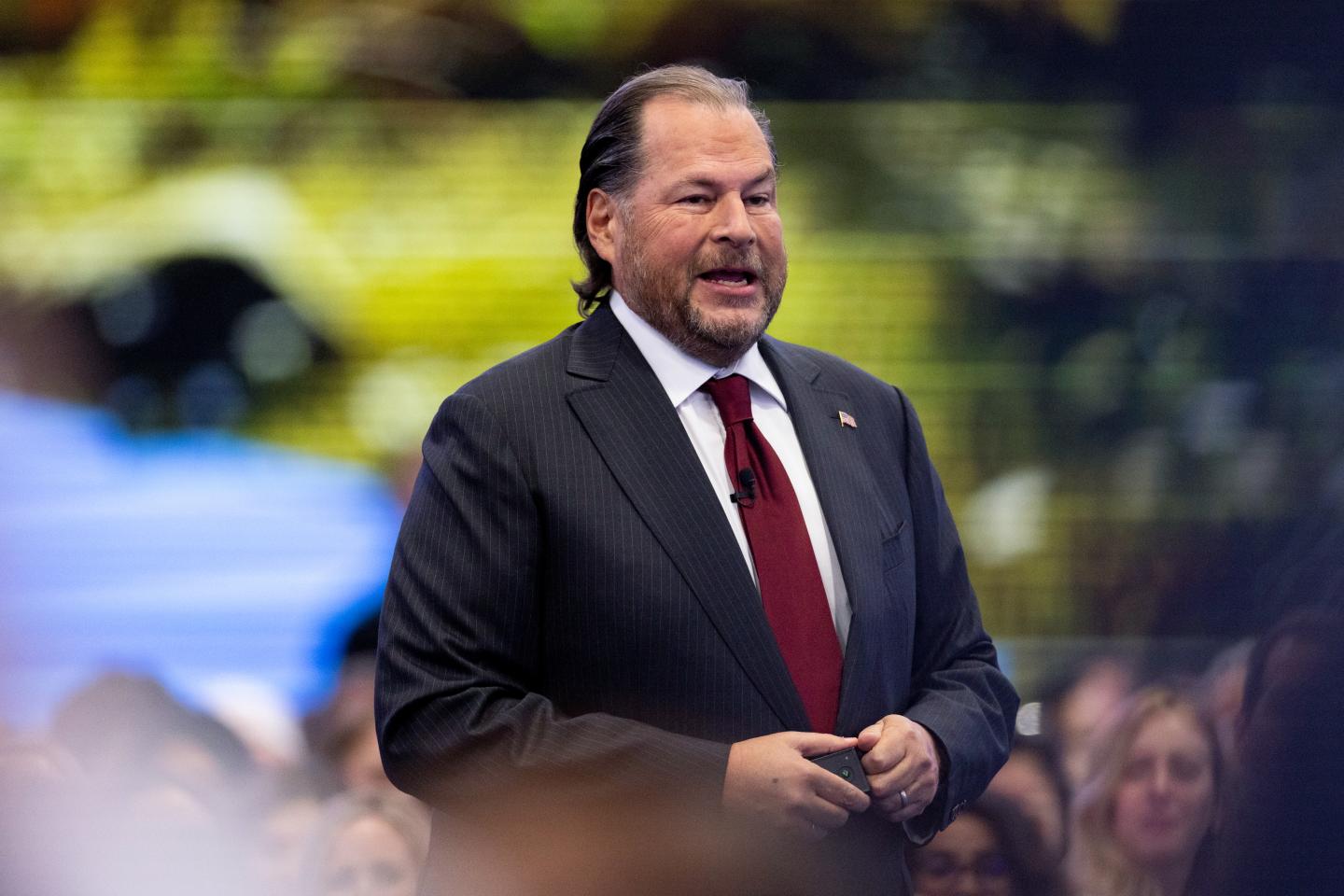
\nSalesforce CEO Marc Benioff drew attention during the opening day of Dreamforce by walking the streets of San Francisco and delivering forceful remarks on artificial intelligence. His comments come as the tech industry converges on the city for its annual conference, with AI safety dominating discussions among top executives.
\n\nWhat Happened
\nBenioff was spotted walking toward Salesforce Tower after a morning keynote where he appeared alongside OpenAI’s Sam Altman and Anthropic’s Dario Amodei. During the interview, Altman called the recent Hugging Face hack by rogue agents a terrifying wakeup call, urging companies to prioritize safety over speed. Benioff echoed the need for accountability, suggesting that product liability laws could hold AI firms responsible much like car manufacturers are held to account for faulty vehicles. He also proposed a Fortune 500-style ranking of companies by ethical standards, praising Apple’s security practices. Other CEOs at the conference took different stances: Nvidia’s Jensen Huang argued speed and safety can coexist, while Meta’s Mark Zuckerberg dismissed concerns, noting AI labs have a natural incentive to build safe systems. Benioff also addressed his controversial past remarks about San Francisco and the National Guard, and noted that Salesforce continues to integrate third-party AI models into its products despite those tensions.
\n\nWhy This Matters
\nDreamforce has become a barometer for where the tech industry stands on AI safety, and Benioff’s remarks highlight a growing divide between those calling for stricter oversight and those pushing for self-regulation. His push for an ethical ranking system could signal a shift toward greater transparency, while his emphasis on corporate accountability reflects broader concerns about unchecked AI development. For businesses, the takeaway is clear: AI safety is no longer just a technical issue but a reputational and financial imperative.
\n\nKey Takeaways
\n- \n
- Benioff argues AI companies must self-regulate or face legal consequences through existing product liability frameworks. \n
- He proposed a public ethical ranking of tech firms, naming Apple as a benchmark for security and transparency. \n
- Other CEOs at Dreamforce held contrasting views, from Huang’s “speed and safety can coexist” to Zuckerberg’s dismissal of doomsday concerns. \n
- Salesforce reaffirmed its AI strategy, including a new reasoning model for Agentforce built with Nvidia and a partnership with Anthropic’s Claude. \n
- The company reported strong financial results, partly driven by AI demand, and dismissed fears of massive job losses, noting it employs more people than ever. \n
Conclusion
\nBenioff’s Dreamforce appearance underscores the tension between rapid AI advancement and the need for responsible governance. As major tech leaders offer divergent approaches to safety and accountability, the conversation is shifting from theoretical risk to practical business impact. The onus remains on individual companies to police themselves, but Benioff’s call for structured ethical oversight may shape how the industry evolves in the months ahead.

Discussion
Join the conversation
Thoughtful reactions, questions, and follow-up ideas help shape the next story.