Introduction
NKENNEAi, the AI infrastructure spin-off from the NKENNE language learning platform, has unveiled its first speech models for African languages, starting with Swahili. The new tools aim to bridge a critical gap in voice technology for millions across the continent.
What Happened
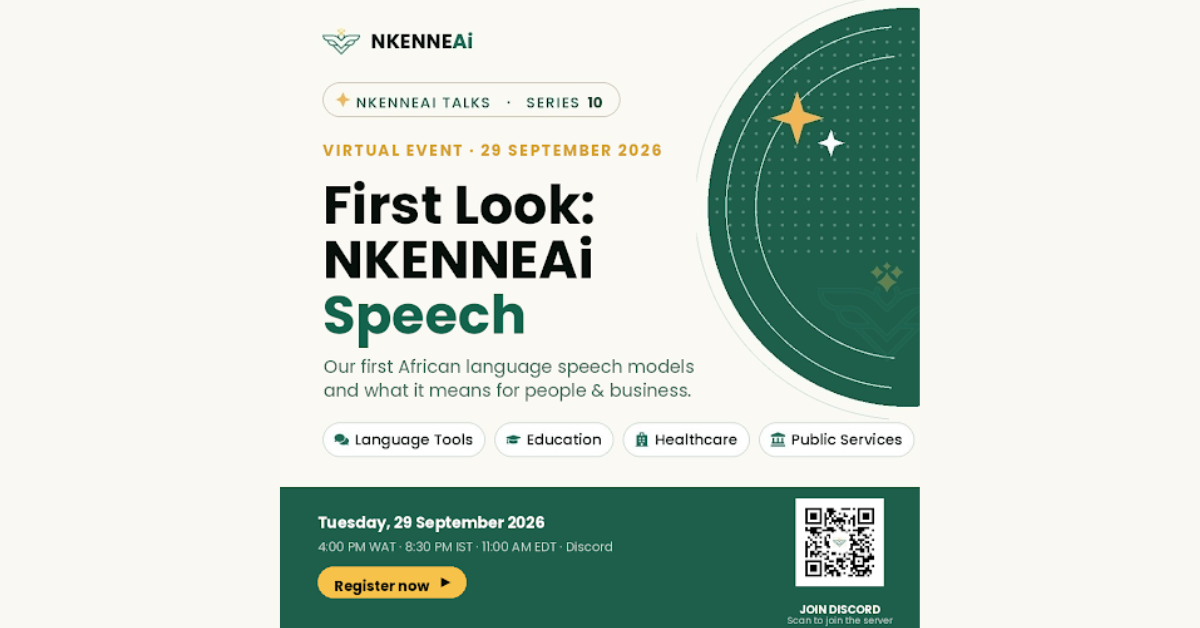
The NSF-backed company announced the launch of its inaugural African language speech models, beginning with Swahili, at a free live event on September 29, 2026. The release adds voice-enabled AI to NKENNEAi's existing text translation suite, targeting the millions of Africans who speak more than they type.
Why This Matters
Most mainstream voice assistants and transcription systems are trained on English-heavy data, leaving hundreds of millions of African language speakers underserved. NKENNEAi's models address this by meticulously tracking tone and regional dialect, factors critical in tonal languages like Yoruba and Igbo, and in Swahili variants spoken from Zanzibar to Nairobi. The technology could reshape service delivery in health clinics, government offices, farming advisories, and call centres where voice is the primary interface.
Key Takeaways
- Models trained on over 65000 hours of audio with built-in tone annotation and native-speaker validation
- Swahili model accounts for regional variations across East and Central Africa, including code-mixing with English and local languages
- Partnerships with Nigeria's National Information Technology Development Agency and T2 Mobile aim to deliver offline-capable AI to devices and mobile subscribers
- The platform evolved from NKENNE, which has already reached more than 400000 learners across 15 African languages
- Upcoming speech models include Nigerian Pidgin, Yoruba, Igbo, and Somali
- A public demo on 29 September 2026 will showcase the Swahili models and outline the roadmap for the next languages
Conclusion
NKENNEAi's launch represents a meaningful step toward inclusive AI that communicates the way everyday Africans actually speak. By grounding its models in tonal accuracy, regional diversity, and real-world partnerships, the company is positioned to extend voice technology to communities that have been left behind by English-centric systems. The September 29 event offers the first public look at what is possible when AI finally speaks the languages of daily life across Africa.



Discussion
Join the conversation
Thoughtful reactions, questions, and follow-up ideas help shape the next story.