Introduction
Every email ends with a quiet decision: what words, if any, should sign off the message? A new study set out to count real-world email sign-offs rather than rely on self-reported surveys, and the results challenge everything many of us were taught about digital etiquette.
What Happened
Researchers compiled four public email collections totaling more than 71216 messages: a live open-source mailing list, a historic corporate archive, and separate piles of legitimate spam and phishing messages. After stripping quoted replies forwards and auto-generated signatures the team isolated the final line each sender typed. The pattern that emerged was striking most messages never included a formal closing at all. Across the open-source list nearly 70 percent had no closing formula and another 11 percent ended with just a name. In the corporate archive the no-closing rate topped 57 percent with 20 percent petering out as a bare signature. When closings did appear gratitude was the clear front-runner in community traffic while formal valedictions remained exceptional.
Why This Matters
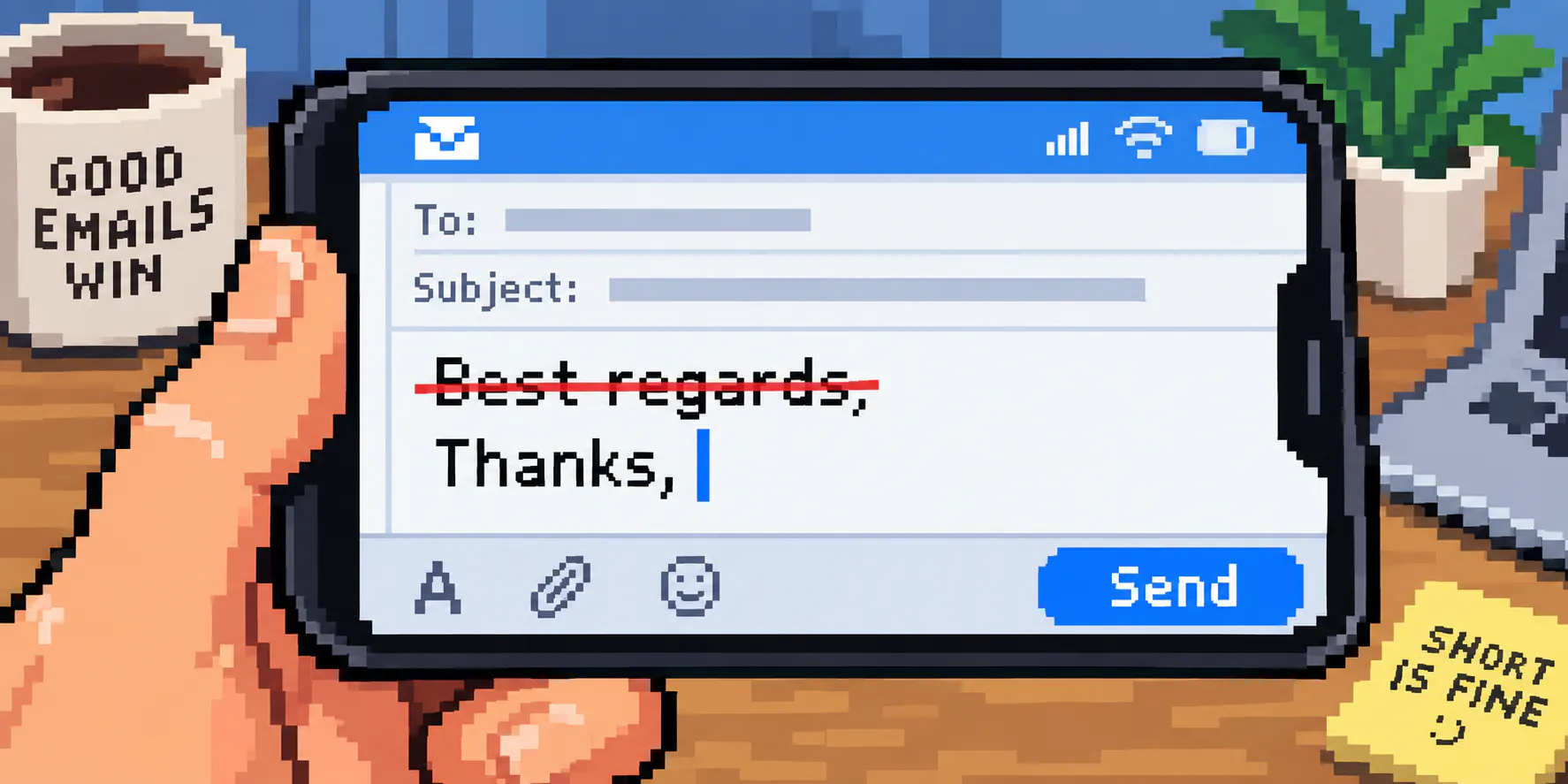
The gap between what people say they do and what they actually do is where the story gets interesting. Survey after survey lists Best regards and Sincerely as common choices but the real-inbox data tells a very different tale. Formal closings turned out to be a strong signal of unwanted mail: spam and phishing messages leaned heavily on the regards family and Sincerely mimicking the institutional tone that business-writing guides still promote. Meanwhile genuine correspondents have converged on brevity and appreciation making an old-fashioned sign-off an unexpected red flag for fraud filters. The findings suggest that what many learned as the proper way to close a message is now rare in honest communication and disproportionately present in inboxes that deserve a second look.
Key Takeaways
- More than half of all email traffic carries no closing formula and nearly one in five messages ends with nothing more than a sender name.
- Thanks and its variants dominate closings in open-source and community-driven email appearing in over 80 percent of messages where a sign-off appears.
- The regards family including best regards kind regards and similar variants accounts for a tiny fraction of human closings but dominates fraudulent mail creating an eleven-fold gap for Best regards specifically.
- Formal endings like Sincerely and Yours truly together make up just 1.3 percent of real messages but surface in 23.8 percent of spam and phishing endings.
- Email culture not hierarchy gender or industry is the strongest predictor of whether a message ends with a sign-off at all.
Conclusion
Email sign-offs have shifted from prescribed politeness to practical shorthand. What once felt like the expected courtesy at the bottom of a message is now the exception rather than the rule and the exceptions often signal something entirely different than intent. Understanding the real distribution behind those few trailing words helps explain why your spam filter flags certain endings and why your colleagues might skip the pleasantries altogether.



Discussion
Join the conversation
Thoughtful reactions, questions, and follow-up ideas help shape the next story.