Introduction
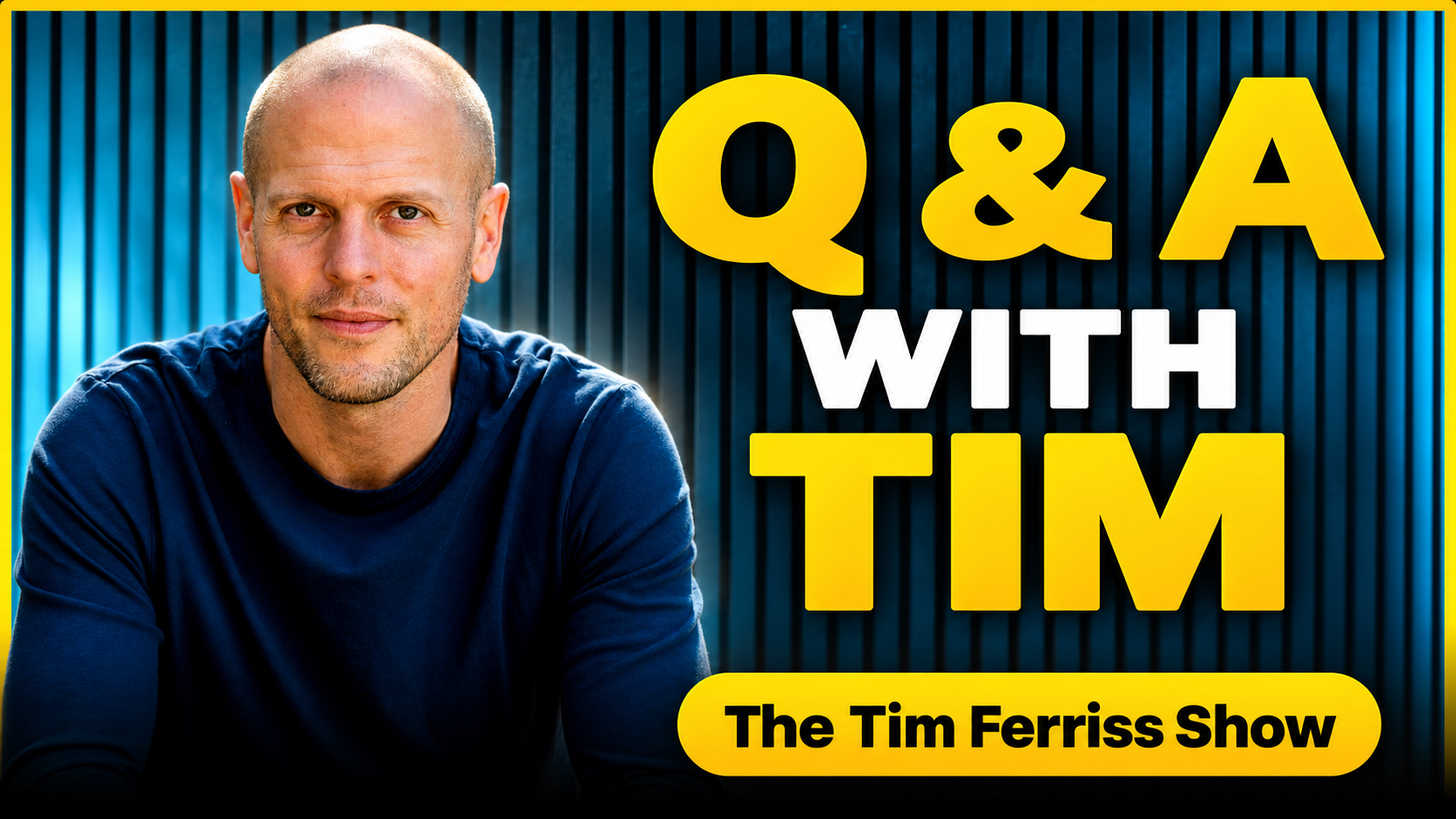
In a recent installment of The Tim Ferriss Show, the author and entrepreneur fields a wide range of listener questions in a dedicated Q&A session. Episode 887 touches on how artificial intelligence is reshaping the ideas behind The 4-Hour Workweek, what it takes to rebuild momentum when life feels stalled, and how to maintain health and relationships past the age of 40. The conversation also drifts into friendships, vision changes, back pain, and the surprising role of serendipity in creative work.
What Happened
Throughout the episode, Tim moves through dozens of topics drawn directly from his audience. He discusses whether the principles of the 4-Hour Workweek still hold up when AI can handle much of the busywork, and he shares his approach to revisiting old advice as circumstances change. Other segments cover rebuilding progress through small daily actions, knowing when to persist versus when to quit, and staying connected with friends who drift apart.
Health and longevity also feature prominently. Tim reflects on age-related vision changes, his experience with accelerated transcranial magnetic stimulation, and bioelectric medicine research involving the vagus nerve. He revisits The 4-Hour Body after 40, touching on slow-carb eating, intermittent fasting, and supplementation. Fitness discussions include climbing, finger strength, gymnastic strength training, and exercises drawn from Back Mechanic and the Egoscue method.
The episode is supported by sponsors including Incogni, Our Place, Momentous, and AG1, and it is available across major podcast platforms such as Apple Podcasts, Spotify, Overcast, and YouTube Music.
Why This Matters
The conversation arrives at a moment when many people are questioning how much of their work should be automated and how much should remain firmly in human hands. Tim’s emphasis on personal agency—using AI to remove drudgery while retaining control over what is worth doing—offers a practical framework for knowledge workers navigating rapid technological change.
Likewise, his focus on health after 40, relationship investment, and intentional leisure speaks to a broader audience interested in sustainable performance rather than short-term optimization. By addressing grief, new parenthood, and back pain alongside productivity, the episode treats well-being as a system rather than a collection of isolated hacks.
Key Takeaways
- AI can handle repetitive tasks, but deciding what work matters remains a human responsibility.
- Rebuilding momentum often starts with small, repeatable daily actions rather than dramatic overhauls.
- Maintaining friendships requires intentional effort, especially when people move in different directions.
- Health strategies should evolve with age, incorporating fasting, strength training, and targeted recovery methods.
- Creating space for serendipity can improve both creative output and overall life satisfaction.
- Meditation, even in short twice-daily sessions, can support focus and emotional regulation.
Conclusion
Episode 887 functions less like a traditional interview and more like a curated advice session, with Tim drawing on years of experimentation, reading, and conversation. Whether the listener is interested in the future of work, the science of back pain, or how to choose the right music for deep focus, the episode offers concrete starting points without promising universal solutions.
For anyone curious about applying timeless productivity principles to an AI-powered world—or simply looking for a structured way to rebuild personal agency—the full conversation is worth a listen on your preferred podcast platform.
Discussion
Join the conversation
Thoughtful reactions, questions, and follow-up ideas help shape the next story.