Introduction
The U.S. economy is undergoing a fundamental reordering of what drives growth. After two decades dominated by residential booms and busts, a new engine is surging ahead: AI-powered infrastructure spending now outpaces traditional housing investment, signaling a pivotal shift in the nation's financial landscape.
What Happened
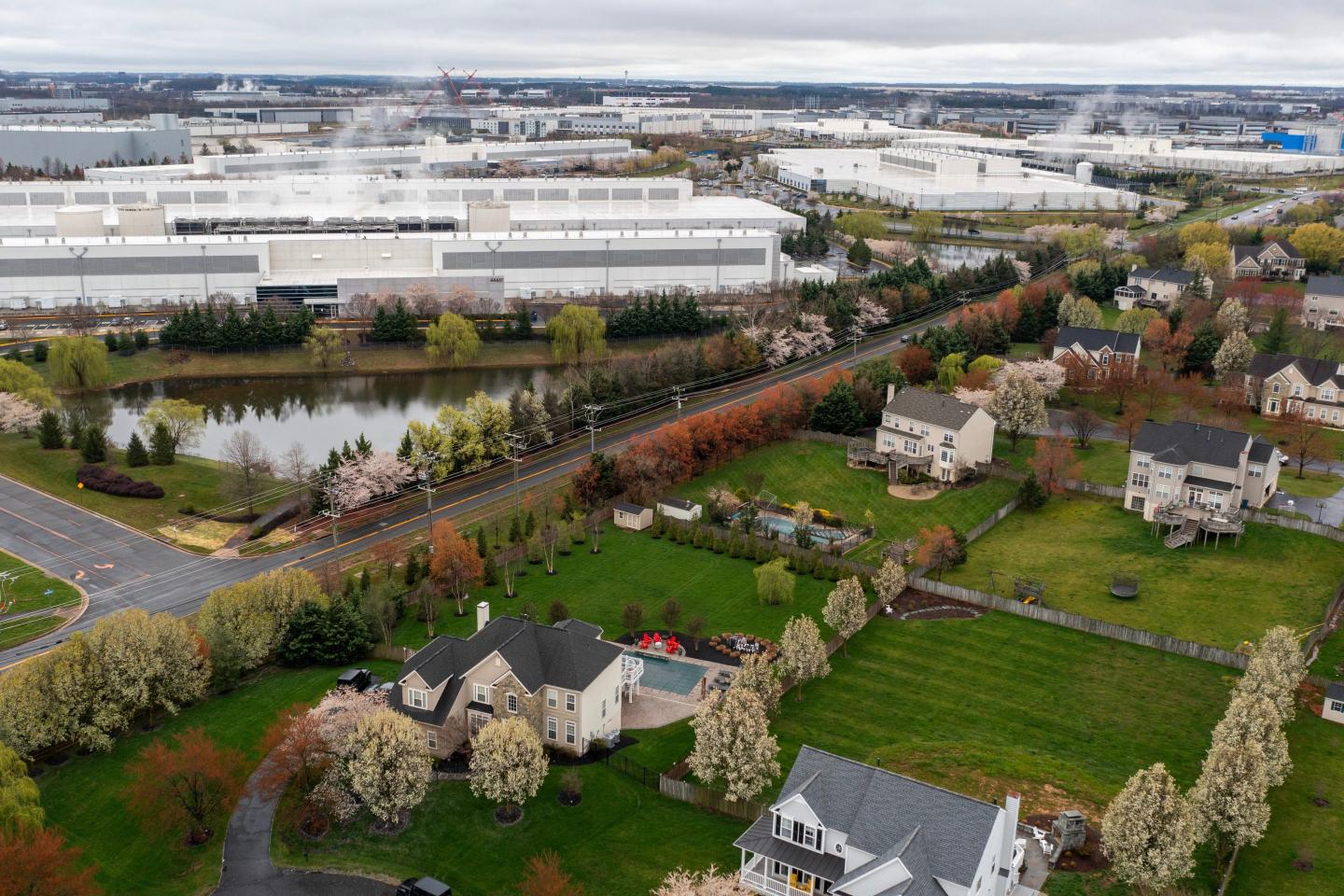
Recent data from economic analysts reveals that inflation-adjusted spending on information-processing equipment—encompassing data centers, servers, and computer hardware—reached $752 billion in the second quarter, surpassing the $748 billion recorded for private residential fixed investment. This crossover marks the first sustained period where tech-driven capital formation has eclipsed the housing market since the early 2000s boom-and-bust cycle.
Hyperscalers including Alphabet, Amazon, Microsoft, Meta, Oracle, and SpaceX are collectively projected to exceed $1.3 trillion in capital expenditures by 2027, up from $470 billion in 2025 and $870 billion estimated for 2026. Meanwhile, the housing market has been largely frozen since the Federal Reserve's aggressive rate-hiking cycle began in 2022, with 30-year mortgage rates hovering near 7% and existing-home supply constrained by the lock-in effect of low-rate homeowners reluctant to sell.
Political and public sentiment is also turning. An NBC News poll found 64% of registered voters would be less likely to support a candidate favoring a new data center in their community, while AI-driven electricity demand and device prices add pressure to the cost-of-living crisis.
Why This Matters
The reallocation of investment from bricks and mortar to silicon has far-reaching consequences. AI spending is far less sensitive to interest rates than housing, meaning the boom can persist even as borrowing costs remain elevated. However, S&P Global warns that the industry's capital expenditure is growing faster than revenue, raising risks of overcapacity if future demand falls short. The firm sees 2028 as a potential inflection point where revenue acceleration could align with spending flattening.
For everyday Americans, the shift means tighter competition for capital, higher electricity bills to power new facilities, and continued pressure on home affordability. With housing starts declining and builder sentiment at a yearly low, the divergence between tech infrastructure and residential development is set to define economic debates through the midterm election season and beyond.
Key Takeaways
- AI infrastructure spending now exceeds residential investment, marking a historic economic pivot.
- Hyperscalers plan over $1.3 trillion in combined capex by 2027, driven by AI infrastructure demand.
- Residential investment remains highly sensitive to mortgage rates, which are near 15-year highs.
- Voter opposition to data centers is growing, with 64% expressing resistance in recent polls.
- S&P Global forecasts a potential 2028 inflection point where revenue growth may finally keep pace with spending.
- Housing supply constraints and high borrowing costs are expected to keep downward pressure on starts through 2026.
Conclusion
The era of housing as the primary engine of U.S. capital formation is giving way to a new paradigm driven by artificial intelligence and digital infrastructure. As the economy adapts to this shift, stakeholders from policymakers to prospective homebuyers will need to navigate the trade-offs of a landscape where code and servers increasingly outweigh bricks and mortar. Watching how revenue trends evolve against relentless capex growth will be key to understanding the next chapter of American economic growth.



Discussion
Join the conversation
Thoughtful reactions, questions, and follow-up ideas help shape the next story.