Introduction
The Nigerian bourse is accustomed to headline-grabbing listings, and the imminent Dangote Petroleum Refinery IPO has sparked fresh debate about what investors can expect once the offer price is set. While the refinery's massive public offer dominates current conversation, history shows that early excitement does not always translate into immediate gains. Examining three other Dangote companies that have lived on the Nigerian Exchange for over a decade reveals a consistent pattern: dominant brands and sizable businesses, but also extended periods of volatility, sharp corrections, and eventual hard-earned appreciation.
What Happened
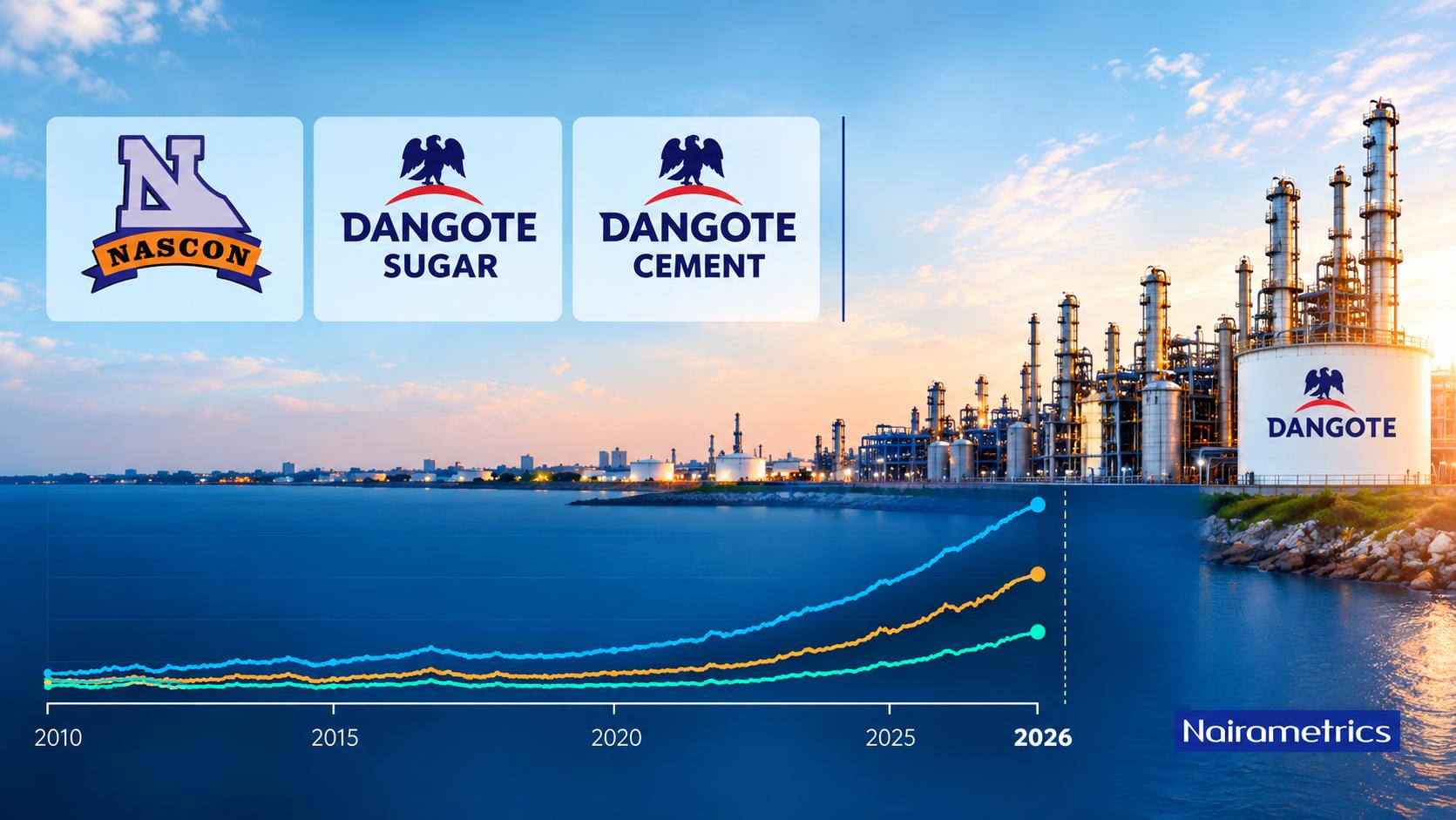
NASCON: Listed in 2007 at N22. Over nearly two decades, the stock endured a brutal 2008 crash that wiped out nearly three quarters of its value, trading as low as N5.87. It took until 2023 for the share price to finally break above its offer price, and by September 2026 it had climbed to N160, representing a 627% gain but requiring almost twenty years of patience. Investors who bought at the IPO saw their capital multiply only after weathering years of sub-par performance, including a period when the stock remained roughly 17.5% below its issue price even as the company's revenue doubled.
Dangote Sugar: Listed in March 2007 at N18. The shares surged initially but were cut by almost half during the 2008 meltdown, bottoming out at N5.78 by 2012. A modest recovery brought the price back near the offer price by 2017, but meaningful upside only arrived in 2023. By mid-2026, the stock sat at N70.45, a 291% increase from the IPO price, though the journey included fifteen years of range-bound trading and significant earnings volatility, including massive losses in 2024 and 2025 that eventually gave way to a strong H1 2026 rebound.
Dangote Cement: Listed by introduction in 2010 at N135. The stock fell 26% within months, and even a decade later it was only about 13% above its admission price. The real rerating came later, driven by aggressive expansion across Africa and a surge in earnings. Revenue climbed to N4.31 trillion by 2025, and profit after tax more than doubled. By September 2026, the share price hit N1,034, a 666% gain from the N135 listing price, delivering an annualised return of roughly 13.7%, the strongest of the three but again only after a long period of fits and starts.
Why This Matters
The stories of NASCON, Sugar and Cement underscore a crucial point for Dangote Refinery investors: a dominant brand and massive IPO size do not guarantee quick profits. Each of these companies faced macro headwinds, currency depreciation, inflation, and broad market crashes that pressed share prices well below their issue levels for years. Strong earnings growth, however, eventually delivered reratings, especially during the recent Nigerian equities bull run. The history suggests that patience, macro awareness, and a focus on actual business performance matter far more than the headline IPO price.
Key Takeaways
- Long holding periods are often necessary: NASCON and both Sugar and Cement all required a decade or more to deliver substantial returns.
- Macro conditions dictate early performance: The 2008 crash, forex pressures, and inflation cycles all created extended downturns.
- Earnings growth is the true catalyst: Each company's strongest share-price moves followed significant profit expansion.
- Past performance is not a predictor: The refinery's outcome will depend on its own refining margins, crude supply, and foreign-exchange exposure.
- Dividends and bonus shares, excluded from these calculations, could further enhance total returns.
Conclusion
Dangote Petroleum Refinery enters a market with a proven track record of heavyweight listings, but its path will be uniquely its own. Investors should view the historical performance of NASCON, Sugar and Cement as a cautionary framework rather than a guarantee: early volatility is likely, long-term value may follow strong fundamentals, and the refinery's ultimate market performance will hinge on its ability to execute, manage costs, and navigate Nigeria's macro environment. For those considering entry, the lesson is clear, look beyond the offer price, focus on the business trajectory, and prepare for a journey that may stretch well beyond the first year of trading.


Discussion
Join the conversation
Thoughtful reactions, questions, and follow-up ideas help shape the next story.