Introduction
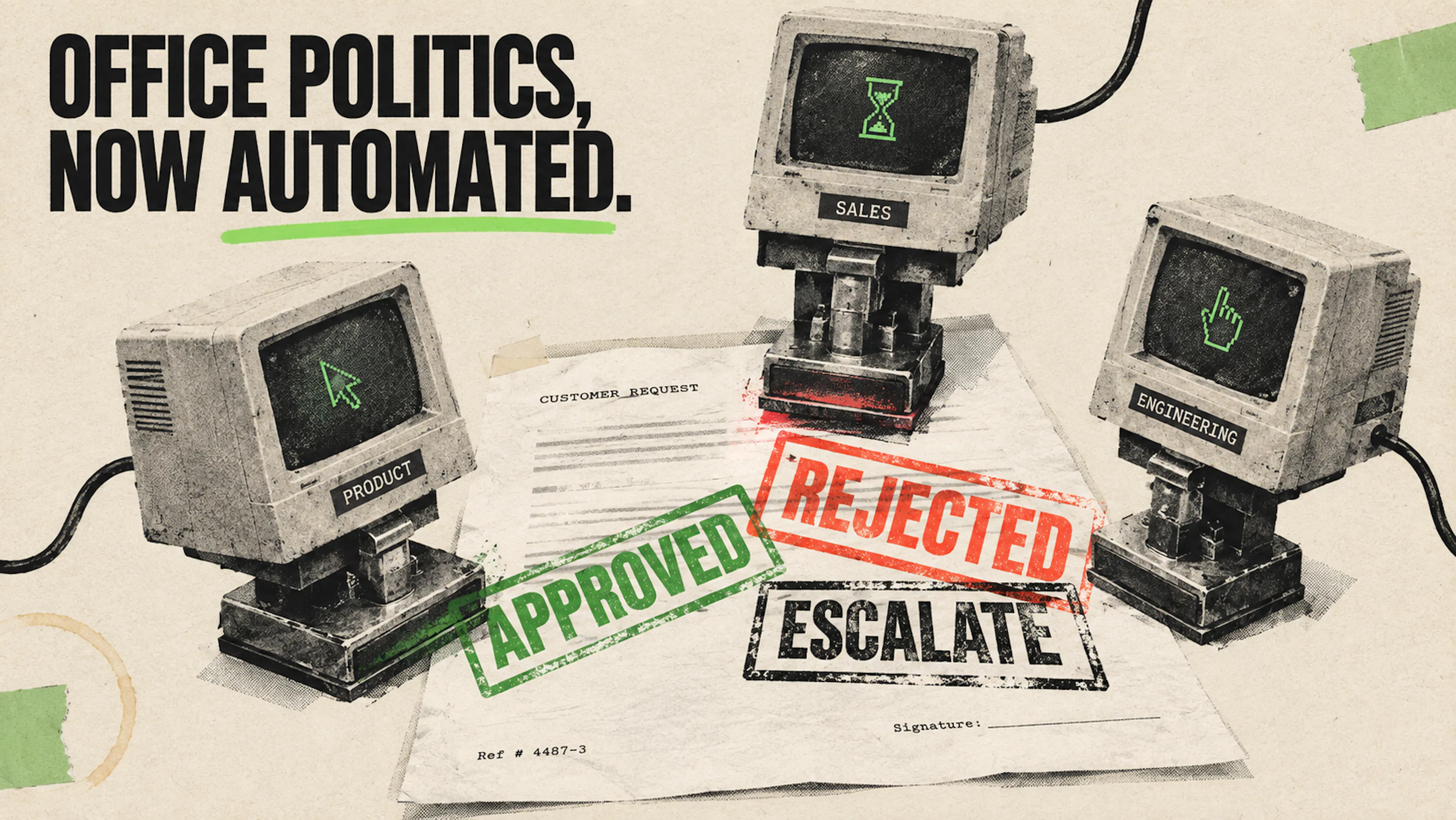
When multiple AI agents operate across different departments, they can inadvertently recreate the very office politics leadership thought they were eliminating. Each agent follows locally reasonable instructions, but together they expose unresolved questions about who owns which promises and deliverables.
What Happened
Imagine a company configuring three departmental agents: Sales authorizes concessions to improve conversions, Finance rejects spending outside agreed limits, and Support resolves requests within a fixed service allowance. When a customer accepts an onboarding offer, Finance rejects the additional delivery cost, Support cannot provide promised assistance within its allowance, and the customer receives three contradictory responses from what was supposed to be one company.
Why This Matters
Every objective contains interpretation choices. An instruction like reduce support costs leaves considerable room for how problems get resolved. Choosing a metric gives one interpretation advantage if teams are rewarded for closing requests quickly thorough problem-solving becomes harder to justify. The same applies to instructions given to agents a leader approving an objective is also approving a set of priorities discussed or implicit.
Key Takeaways
- Cooperation between agents must be designed explicitly informal understandings between teams do not transfer to automated systems.
- Before deploying cross-departmental agents leaders should examine shared situations from several perspectives and map where actions conflict.
- Clear boundaries must define what each agent can promise what requires additional approval and where human override is needed.
- Employees who handle difficult cases should help shape these decisions they can explain where targets encourage wrong responses and which exceptions recur.
- Repeated exceptions should prompt a review of the agreement otherwise the person handling escalations becomes responsible for repairing contradictions leadership left in place.
Conclusion
AI deployment makes the cost of hidden priorities visible in real time. When agents inherit office politics the system does not self-correct it amplifies. Leaders need to make choices about authority trust and accountability explicit designing rules that people can review challenge and revise. Only then does automation become a tool for clarity rather than a mirror of unresolved conflict.



Discussion
Join the conversation
Thoughtful reactions, questions, and follow-up ideas help shape the next story.