Introduction
AI agents are increasingly powering real-world features, but when they stumble, the default fix is often a tweaked prompt. The deeper truth is that failures usually stem from one of four engineered layers sitting between the user and the model. This post breaks down a four-layer framework that helps you pinpoint where things actually break.
What Happened
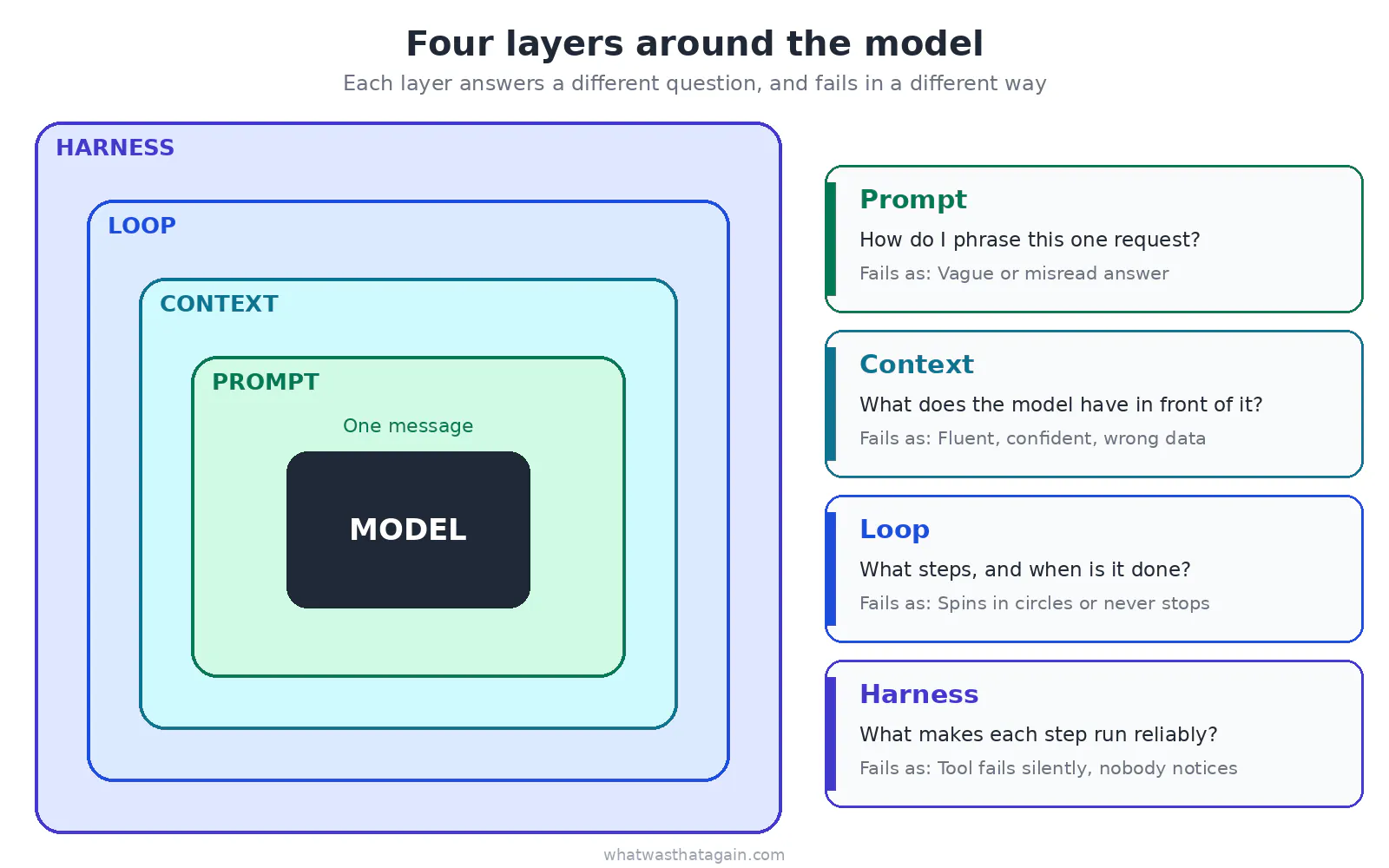
The article introduces four engineered layers wrapped around a base model. Prompt engineering fine-tunes a single exchange how you phrase the instruction what examples you include and what output format you demand. Context engineering asks what the model can actually see retrieved documents conversation history tool definitions and memory. It is about curating the right information not just dumping everything into the window. Loop engineering designs workflows where the model runs repeatedly checks its own progress and decides what to do next without a human in the loop each time. It needs a trigger a goal available actions a way to verify success and memory across steps. Harness engineering builds the scaffolding that makes all of this reliable tool calls retries timeouts checkpoints error recovery sandboxing and logging. The famous formula agent model harness comes from LangChain and the harness is where sandboxing sensors and guides live.
Why This Matters
Failures often get misattributed. A prompt that is carefully worded can still return stale or wrong output if the model never had current data context or if the retrieval tool failed silently harness. If a loop spins forever or exits too early the problem might be missing exit conditions or poor step design not the prompt itself. Understanding these layers means you stop fixing the wrong thing and start asking the right question: is the issue in what the model was told what it had access to how it was allowed to iterate or what infrastructure kept it running?
Key Takeaways
- Prompt engineering optimizes a single message and is necessary but not sufficient for complex agents.
- Context engineering decides what earns a spot in the models context window on every turn guarding against confident mistakes over wrong or overwhelming info.
- Loop engineering designs the workflow triggers goals actions verification and memory so the system can operate autonomously.
- Harness engineering provides the infrastructure retries sandboxes logging error recovery and the agent model harness reality that keeps systems from collapsing under their own weight.
- The four layers overlap and industry boundaries are still being argued but the framework is a useful mental model for anyone building or debugging AI agents.
Conclusion
Next time an AI feature misbehaves resist the urge to just rephrase the prompt. Ask whether the problem is in what the model was told what it had access to how it was allowed to iterate or what machinery kept it running. Fixing the right layer not just the wording is what transforms a fragile demo into a reliable product.







Discussion
Join the conversation
Thoughtful reactions, questions, and follow-up ideas help shape the next story.