Introduction
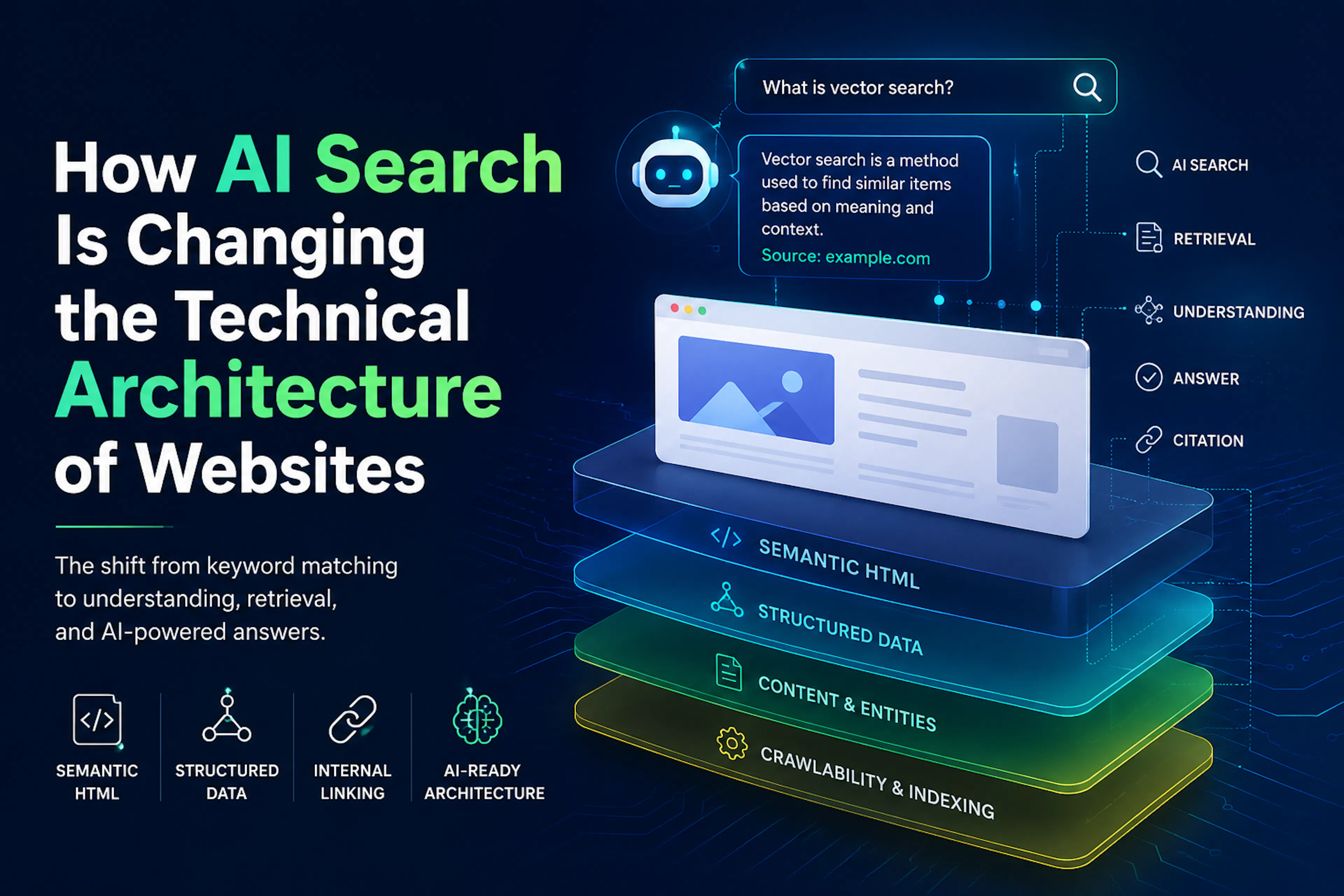
AI search is reshaping how websites must be structured, requiring them to serve humans, crawlers, and intelligent retrieval systems simultaneously. This shift demands a fundamental rethink of information architecture beyond traditional SEO.
What Happened
The rise of AI-powered discovery means websites can no longer rely on keyword matching alone. Modern extraction systems pull facts, understand context, and synthesize answers from across the web, making underlying architecture the deciding factor in visibility.
Why This Matters
When AI interfaces pull information from multiple sources, a site's structure determines whether its content is used or overlooked. Clear semantics, visible boundaries, and machine-readable data ensure both people and algorithms find what they need.
Key Takeaways
- Semantic HTML gives machines meaningful clues about page structure, far beyond what generic containers provide.
- Obvious content boundaries help automated systems identify the primary message without noise from navigation, footers, or related links.
- Structured data adds semantic depth, describing what content represents in ways visible HTML alone cannot.
- Internal linking builds a connected information graph, guiding users and crawlers through related concepts rather than isolated pages.
- Stable URLs support both user trust and consistent indexing, especially when patterns remain predictable as sites grow.
- Canonicalization prevents duplicate URL confusion, helping search systems identify the primary version of any document.
- JavaScript transparency ensures critical information appears in the initial HTML, not buried behind interactive layers that crawlers may miss.
- Atomic facts make important claims easy to identify, extract, and verify, particularly for AI systems needing specific data points.
- Clear authorship and source attribution build trust for both human readers and machine extraction systems.
- Sitemaps and robots.txt remain essential crawl infrastructure, guiding discovery and controlling access to non-public routes.
- Retrieval-first design shifts the focus from ranking positions to making information clearly findable, attributable, and usable across all search interfaces.
Conclusion
The most durable websites won't chase every AI trend. They'll invest in solid information architecture, semantic markup, clean URLs, organized content, and transparent sourcing. These practices serve both people and algorithms, ensuring visibility regardless of how search evolves.



Discussion
Join the conversation
Thoughtful reactions, questions, and follow-up ideas help shape the next story.