Introduction
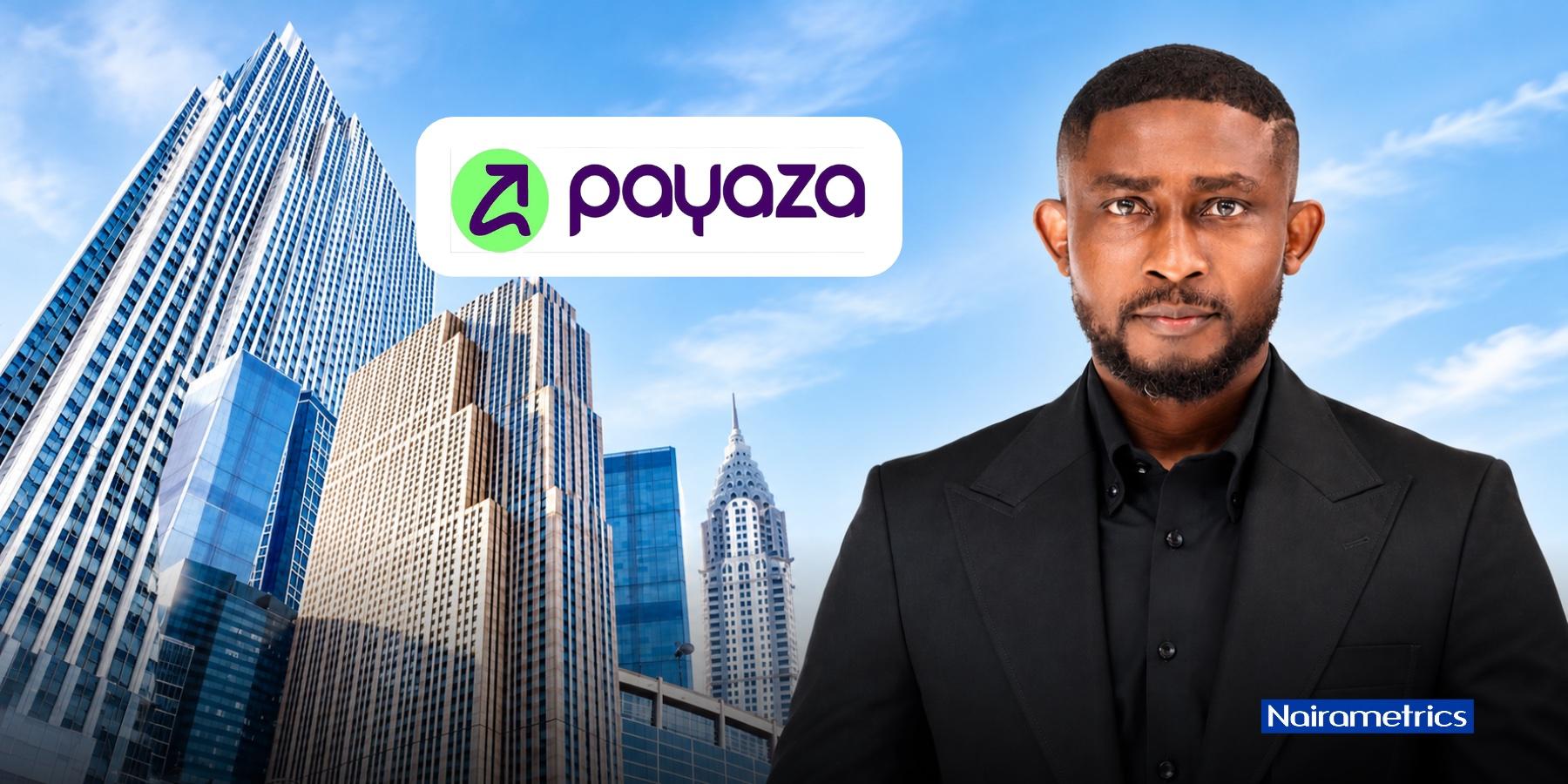
Seyi Ebenezer spent roughly 15 years working inside Nigeria's accounting and banking sectors, assisting companies in securing funding, arranging debt facilities, and funding growth plans. His roles took him through KPMG and major financial institutions, where he observed how money moves through companies and what separates resilient enterprises from those under financial strain. In 2021, he left the traditional banking path to build Payaza Africa Limited, a payments technology company aimed at fixing the fragmented and expensive transaction systems that he saw limiting African businesses.
What Happened
Ebenezer began his career as a graduate trainee at KPMG Nigeria in March 2009, shortly after turning 22. He joined Access Bank in January 2010 and spent nearly eight years in commercial and business banking before moving to Keystone Bank in November 2017. By the time he left Keystone in February 2024 as Zonal Head, General Commerce, Corporate Bank & South, he had overseen corporate banking relationships across industries including oil and gas, real estate, technology, e-commerce, and logistics.
His education includes an MBA from Lagos Business School, an Executive MBA from Kellogg School of Management at Northwestern University, and a finance certificate from Harvard University. A Lagos Business School profile published in October 2026 estimated that he had facilitated debt and capital transactions worth more than $1 billion.
While still employed in corporate banking, Ebenezer started developing Payaza in 2021. The company was formally incorporated on March 23, 2022, and began trading in July 2022. Its early years were difficult: regulatory approvals took time, and the business had to fund expensive technology before it could generate revenue. Ebenezer has said Payaza hit break-even roughly 21 months after it started operating.
Payaza's audited results show rapid growth. Revenue rose to N20.16 billion in 2024 from N9.47 billion in 2023, while profit before tax increased to N9.98 billion from N5.03 billion over the same period. The company has since expanded beyond Nigeria, operating in 31 markets and supporting payments in more than 40 currencies through relationships with Visa and Mastercard.
Rather than relying only on venture capital, Payaza has tapped Nigeria's debt capital market. It launched a N50 billion commercial paper programme on the FMDQ Exchange in November 2024 and expanded that to N150 billion by February 2026. The company has raised more than N70 billion across six commercial paper series, with N32.53 billion repaid as of February 2026, and has issued and redeemed over N80 billion in commercial paper across several series without missing a payment.
Credit rating agency Agusto & Co. upgraded Payaza in 2026 to A- for long-term obligations and A1 for short-term obligations, with a stable outlook. The company is also pursuing a listing on the Nasdaq Capital Market. Outside fintech, Ebenezer joined the board of Livestock Feeds Plc on November 17, 2026, and was shortlisted for the Entrepreneur of the Year Award at the AMBA & BGA Excellence Awards 2027.
In the first half of 2026, Payaza processed more than N6.25 trillion in total payment value, generated N31.10 billion in revenue, and held N169.01 billion in cash and cash equivalents.
Why This Matters
Ebenezer's story illustrates how deep experience in corporate banking can be redirected toward building financial infrastructure. By using commercial paper instead of depending solely on equity investors, Payaza demonstrates an alternative funding model for African fintechs. Its credit-rating upgrade and pursuit of a Nasdaq listing also signal that Nigerian payments companies can meet institutional standards and attract international investors.
The broader implication is for African commerce. Businesses across the continent often lose growth opportunities because cross-border payments remain slow and costly. Payaza's effort to connect African merchants with global payment networks addresses that structural gap directly.
Key Takeaways
- Seyi Ebenezer transitioned from corporate banking roles at Access Bank and Keystone Bank to founding Payaza Africa Limited.
- Payaza was incorporated in March 2022 and reached break-even within approximately 21 months of starting operations.
- The company has raised more than N70 billion through six commercial paper series on the FMDQ Exchange, repaying N32.53 billion by February 2026.
- Agusto & Co. upgraded Payaza's credit ratings to A- long-term and A1 short-term in 2026.
- Payaza operates in 31 markets, supports more than 40 currencies, and partners with Visa and Mastercard.
- Ebenezer joined the board of Livestock Feeds Plc in November 2026 and was shortlisted for a major MBA entrepreneurship award in October 2026.
Conclusion
Seyi Ebenezer's move from banking executive to fintech founder reflects a broader shift in how African financial infrastructure is being built. Payaza's growth in revenue, profitability, and geographic reach shows that a payments company rooted in Nigeria can compete on an international stage. With a Nasdaq listing in its sights and a growing presence in corporate governance, Ebenezer's next chapter will be worth watching for anyone interested in the future of African finance.
Discussion
Join the conversation
Thoughtful reactions, questions, and follow-up ideas help shape the next story.