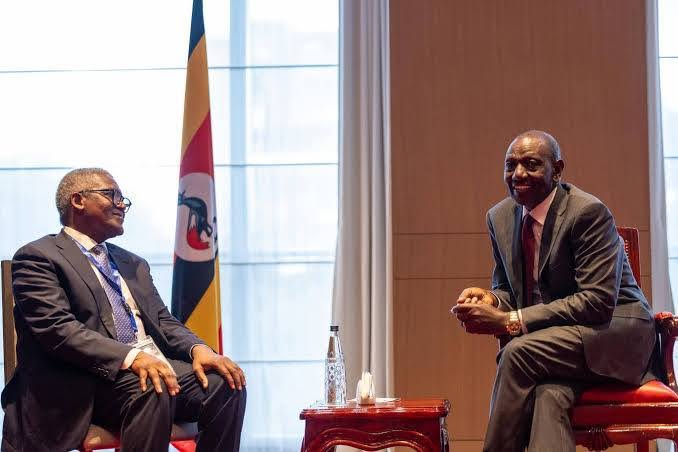
Kenya is moving forward with plans to support a major private investment in its energy sector. The East African nation intends to grant tax relief on imported equipment for a proposed $16 billion oil refinery led by Nigerian industrialist Aliko Dangote. The facility, slated for the coastal town of Lamu, is designed to process hundreds of thousands of barrels of crude oil daily and reduce the region's reliance on imported petroleum products.
What Happened
Kenya's Treasury Secretary, John Mbadi, revealed the plan during a television interview, with the details later reported by international news outlets. According to Mbadi, the project qualifies for duty and tax exemptions because its value surpasses the minimum investment threshold set by Kenyan law. The exemptions would cover value-added tax, excise duty, and railway development levies on capital goods such as machinery and equipment. Dangote's company must submit a formal request to access the incentives, and it may also be eligible to recover taxes already paid on equipment brought in for early site work.
Why This Matters
The proposed refinery would be modelled on Dangote's existing operation in Nigeria and is expected to process 700,000 barrels of crude per day. Its output—petrol, diesel, and jet fuel—would serve Kenya and neighbouring East African markets, positioning the country as a regional refining hub. However, the incentives arrive at a time when Kenya is managing revenue shortfalls, higher public spending, and significant debt. The Treasury has previously reported that tax exemptions and related concessions cost the government roughly 262.6 billion Kenyan shillings, or about $2.02 billion, in 2025—equivalent to approximately 1.5% of gross domestic product. Policymakers must now weigh the long-term economic benefits of the refinery against the immediate revenue forgone.
Key Takeaways
- Kenya plans to waive VAT, excise duty, and railway development levies on equipment for Dangote's proposed $16 billion refinery.
- The facility is planned for Lamu and is expected to process 700,000 barrels of crude oil daily.
- Tax exemptions apply because the investment exceeds Kenya's minimum threshold of 5 billion Kenyan shillings.
- Dangote must file a formal application to claim the incentives and may recover taxes already paid on imported equipment.
- The project has secured engineering support from India's Engineers India Limited and US-based Honeywell Technologies.
- Construction is expected to take about 40 months from a September 2026 groundbreaking, with commissioning targeted for 2030.
- Kenya's existing tax expenditure was approximately $2.02 billion in 2025, raising questions about the cost of additional concessions.
Conclusion
If completed, the Lamu refinery could reshape fuel supply dynamics across Eastern Africa while expanding Dangote's refining footprint beyond Nigeria. The tax package signals Kenya's willingness to court large-scale foreign investment, but it also highlights the tension between offering incentives and protecting national revenue. As the project moves toward a 2030 commissioning target, stakeholders will watch closely to see whether the promised economic benefits outweigh the cost of the tax relief.
Discussion
Join the conversation
Thoughtful reactions, questions, and follow-up ideas help shape the next story.