Introduction
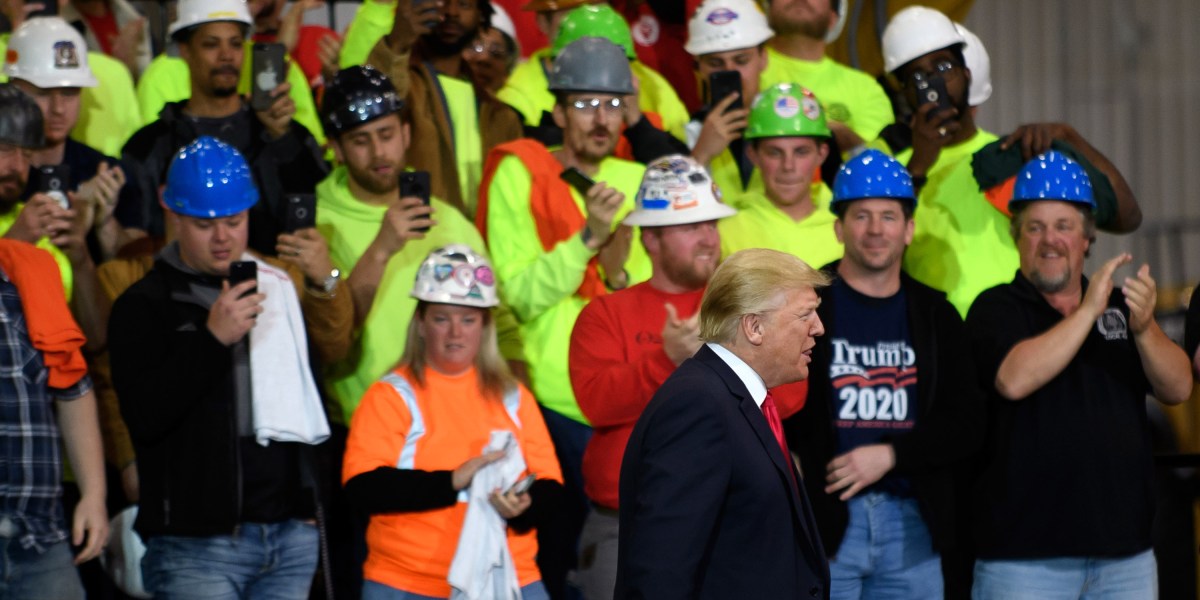
As Labor Day 2026 arrives, union workers and their families confront a familiar set of economic pressures, from climbing grocery bills to lingering concerns about job security. The holiday comes as the political calendar shifts toward November midterms, where union support could prove decisive in several competitive races.
What Happened
Recent Bureau of Labor Statistics data confirms that union membership has fallen to 10.0% nationally, down from 20.1% in 1983 and representing roughly 14.7 million workers. Since the start of 2025, the U.S. economy has lost 75,000 manufacturing jobs, a 0.6% decline that adds to a long-term downward trend. President Trump has championed tariffs and domestic production pledges, yet economists note that automation and tech-driven efficiency mean new factories often require far fewer workers. Inflation remains a pocketbook concern, with food prices up 3.0% year-over-year according to the U.S. Department of Agriculture. Across the Great Lakes, New England, and western Pennsylvania, generational resentment over the deindustrialization of the 1970s and 1980s continues to shape voter sentiment. Meanwhile, the Trump administration's aggressive moves toward federal workforce reduction have sparked legal battles over public sector collective bargaining.
- Federal job cuts during Trump's second term disrupted lives, many of which were previously represented by labor unions.
- Economist Mark Zandi of Moody's told Marketplace in July 2026 that increased manufacturing output does not necessarily create more jobs, as newer factories are far more automated.
- Trump's tariff policy has been described as making it more profitable for American manufacturers to produce at home, but critics argue the job gains may be limited by technology.
Why This Matters
Union voters are concentrated in swing states including Michigan, Pennsylvania, and Nevada, where the share of union-affiliated voters exceeds the national average of 10%. In closely contested House and Senate races, even a modest shift in union support could determine which party wins control of Congress. Historically, most union members have leaned Democratic, but that loyalty has softened since the 1970s. In the 2024 presidential campaign, union turnout was significant but at a lower rate than in the 1960s. As midterms approach, analysts suggest Trump's performance on jobs, prices, and workers' rights will heavily influence whether union households stay loyal or swing opposition.
Key Takeaways
- Union membership nationwide stands at 10.0%, a four-decade low, with public sector workers (32.9%) far outpacing private sector unionization (5.9%).
- Manufacturing job losses continue, and even if production returns, automation limits new hiring, meaning fewer workers benefit.
- Inflation pressures, particularly on food and gasoline, remain a top concern for blue-collar voters heading to the polls.
- In swing states, the union vote share could be the margin of victory in several tight races.
- Federal union rights face unprecedented challenges, with courts already blocking administration efforts to limit collective bargaining.
Conclusion
As November's midterms approach, the intersection of economic anxiety, labor history, and political strategy will shape the outcome. Union voters, especially in key states, remain a powerful and closely watched bloc. Their decisions will reflect both immediate financial worries and deeper, generational ties to the industry and the tradition of collective action.


Discussion
Join the conversation
Thoughtful reactions, questions, and follow-up ideas help shape the next story.