Introduction
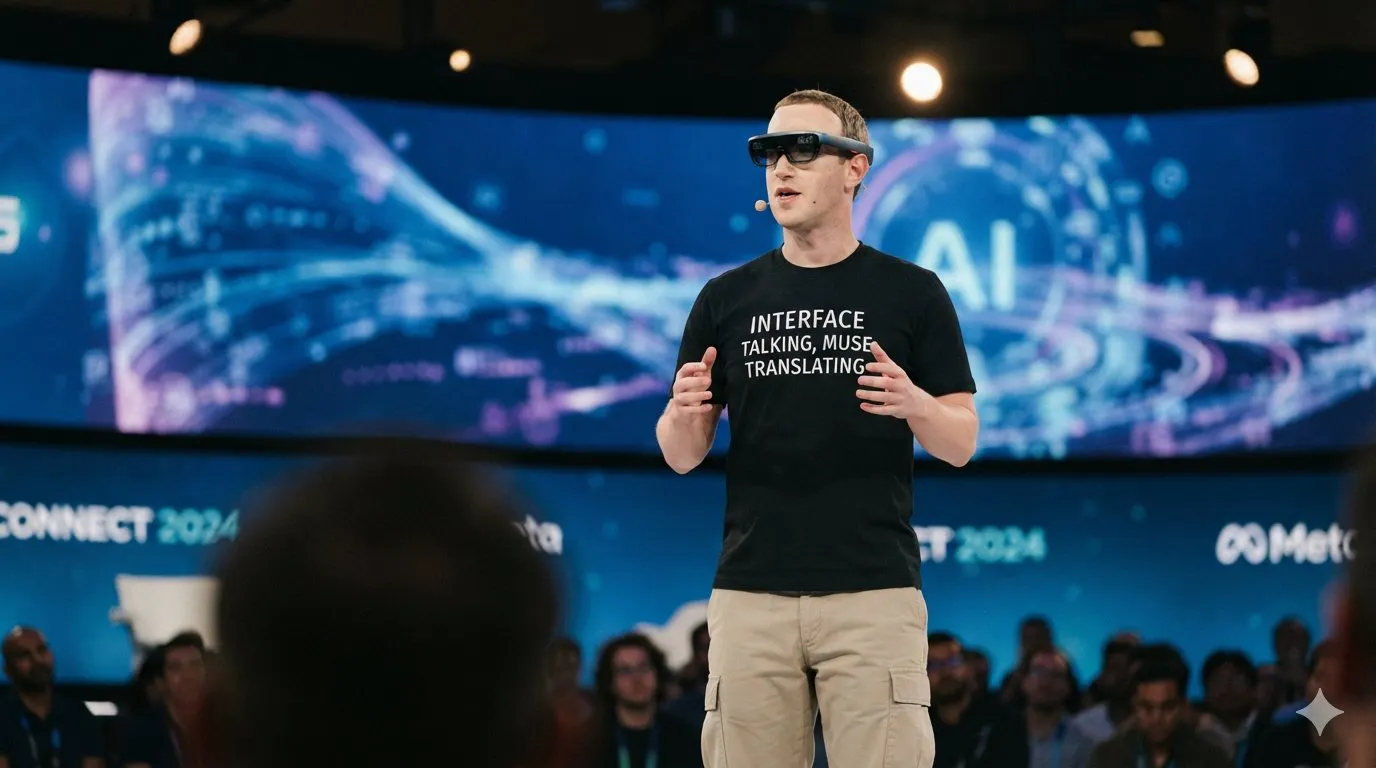
The AI race dominates headlines, with companies scrambling to outperform each other on benchmarks. Yet Meta's position suggests the competition may overlook what really matters: the company's two-decade head start in building a platform that already reaches billions. Instead of chasing model supremacy, Meta leverages its ecosystem to deliver a personal agent that works within a massive, existing user base.
What Happened
Muse launched on September 8 and quickly topped the US App Store, logging 2.8 million downloads in its first 12 days. Beyond simple chat, Muse can manage emails, research purchases, book travel, use financial information, complete transactions, and continue working even after the app closes. Meta's AI journey spans years: Fundamental AI Research was founded in 2013, and AI is already embedded across Facebook, Instagram, WhatsApp, and Messenger. In April 2025, the company launched a standalone Meta AI app designed to remember context and personalize using information people have already chosen to share across Meta products. By May that year, Zuckerberg announced Meta AI had reached one billion monthly users. Later in 2025, Meta announced that interactions with its AI products would become another signal used to personalize content and advertising across connected Meta accounts. Muse Spark, Meta's new model family, followed with agentic capabilities that connected Meta AI to email and calendars, allowing it to make plans and complete work—positioning the assistant as a persistent, action-oriented tool rather than a one-off chatbot.
Why This Matters
Meta's advantage isn't just model quality—it's reach. With 3.6 billion daily users across its Family of Apps, the company controls the distribution channel that matters most to ordinary users. Roughly 97.6% of Meta's quarterly revenue still comes from advertising, built on two decades of mastery in attention and behavior prediction. AI now amplifies that foundation: improved recommendations drive engagement, which fuels more data, which sharpens personalization. As Zuckerberg noted, Meta excels at building products that scale to enormous audiences once they work. The real question may not be who builds the smartest model, but who controls the interface through which billions interact with AI daily.
Key Takeaways
- Muse's value lies in context, not just capability; it needs access to calendars, email, and personal data to be truly useful.
- Meta's ecosystem—spanning social, messaging, and financial accounts—provides a depth of authenticated context few rivals can match.
- Privacy protections, including secure virtual machines and user-controlled connections, aim to balance utility with trust, though the identity fragmentation problem remains.
- The strategic goal isn't to win every model benchmark, but to own the interface through which billions interact with AI daily.
- Meta's history of fast iteration and platform control suggests it will adapt quickly regardless of model-level competition.
Conclusion
Whether Muse becomes the dominant personal agent or not, Meta's two-decade head start in distribution, identity, and behavioral data positions it uniquely. The real race may not be about who builds the smartest model, but who owns the relationship between the AI and the human using it. For Meta, the starting grid was set long ago.








Discussion
Join the conversation
Thoughtful reactions, questions, and follow-up ideas help shape the next story.