Introduction
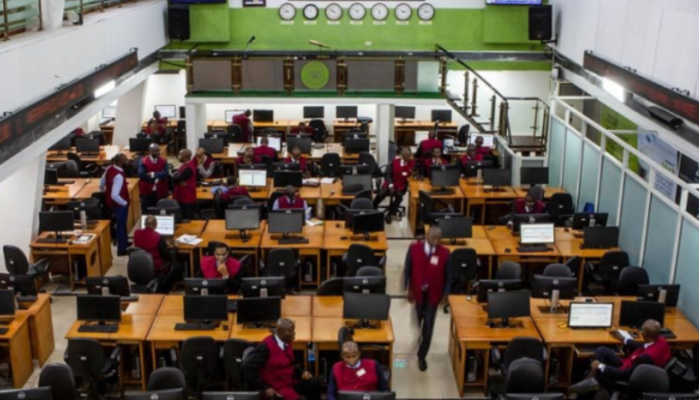
The Nigerian Exchange experienced intensified selling pressure during midday trading on Thursday, November 26, 2026. Data reviewed by Nairametrics showed that ten of thirty major tracked equities were on full offer, meaning there were no matching buy orders at the time. Nine of those names traded roughly ten percent below their opening prices, while twenty-one of the thirty tracked companies sat at least twenty percent below their 52-week highs. The weakness spanned telecommunications, industrial goods, agriculture, consumer goods, power, and oil and gas.
What Happened
Selling pressure was broad-based. Airtel Africa changed hands around N5,632.40 compared with an opening print of N6,258.20. Dangote Cement was offered at N1,190.70, down from N1,323. Aradel Holdings traded near N1,049.80 against N1,166.40, while BUA Foods was quoted at N684.60 versus N760.60. Agricultural names were not spared; Okomu Oil was offered at N1,023.40 compared with N1,137.10, and Presco traded at N1,499.90 against N1,656.80. Power stocks Geregu Power and Transcorp Power also appeared on the full-offer list, each roughly ten percent below opening levels. Guinness Nigeria and Transcorp Hotels completed the group of ten.
Beyond the intraday moves, several stocks are deep in bear-market territory. Aradel Holdings was about 48 percent below its 52-week high of N2,024. Transcorp and International Breweries trailed their peaks by roughly 44 percent and 42 percent, respectively. Okomu Oil was 42 percent below its high of N1,765, while BUA Cement and First HoldCo were more than 37 percent off their highs. Presco was approximately 35 percent below its peak.
Three names even traded below their 52-week lows: Geregu Power at N743.20 versus a prior low of N825.70, BUA Foods at N684.60 against N734.20, and Okomu Oil just under N1,038. If transactions occur at these indicative prices, new 52-week lows could be established.
Banking stocks showed a mixed picture. None of the ten banking names tracked was on full offer, but six traded more than 20 percent below their 52-week highs. First HoldCo led the decline at 37.24 percent off its peak, followed by UBA at 31.88 percent and GTCO at 30.04 percent. Access Holdings, ETI, and Zenith Bank were between 25 and 29 percent below their highs. FCMB stood out with buying interest, posting a bid of N12.85 against an opening price of N11.75. Oando was the sole stock on full bid among the thirty companies monitored.
Why This Matters
The sell-off coincides with a broader market downturn and rising competition from fixed-income assets. After the Central Bank of Nigeria's Treasury bill auction on Wednesday, the 364-day stop rate climbed 71 basis points to 16.60 percent, implying an annualised yield near 19.89 percent. That higher risk-free return raises the bar for equities and may encourage some investors to rotate out of stocks. Because several affected companies carry large market capitalisations, transactions at current offer prices could weigh heavily on the All-Share Index and total market capitalisation. It is worth noting that the market had not closed at the time of the snapshot, so indicative prices and percentages could shift before the final bell.
Key Takeaways
- Ten of thirty major NGX stocks were on full offer during midday trading on November 26, 2026.
- Twenty-one of the thirty tracked companies were at least 20 percent below their 52-week highs.
- Telecommunications, cement, agriculture, power, and oil and gas names all faced heavy selling.
- Geregu Power, BUA Foods, and Okomu Oil traded below their previously recorded 52-week lows.
- No banking stock was on full offer, though six major banks remained more than 20 percent below their peaks.
- Rising Treasury bill yields are providing investors with a fixed-income alternative to equities.
- Prices are indicative and may change before the market closes.
Conclusion
For investors, the current environment presents both risk and potential opportunity. Stocks trading far below historical highs may offer entry points for those with a long-term view, but the absence of buy orders across multiple heavyweights signals that selling pressure has not yet eased. Before buying the dip, investors should weigh whether lower prices reflect attractive valuations relative to sustainable earnings, cash flow, and dividends. Meanwhile, elevated Treasury bill yields give capital-preservation-focused investors a competing option while equity market conditions remain unsettled.
Discussion
Join the conversation
Thoughtful reactions, questions, and follow-up ideas help shape the next story.