Introduction
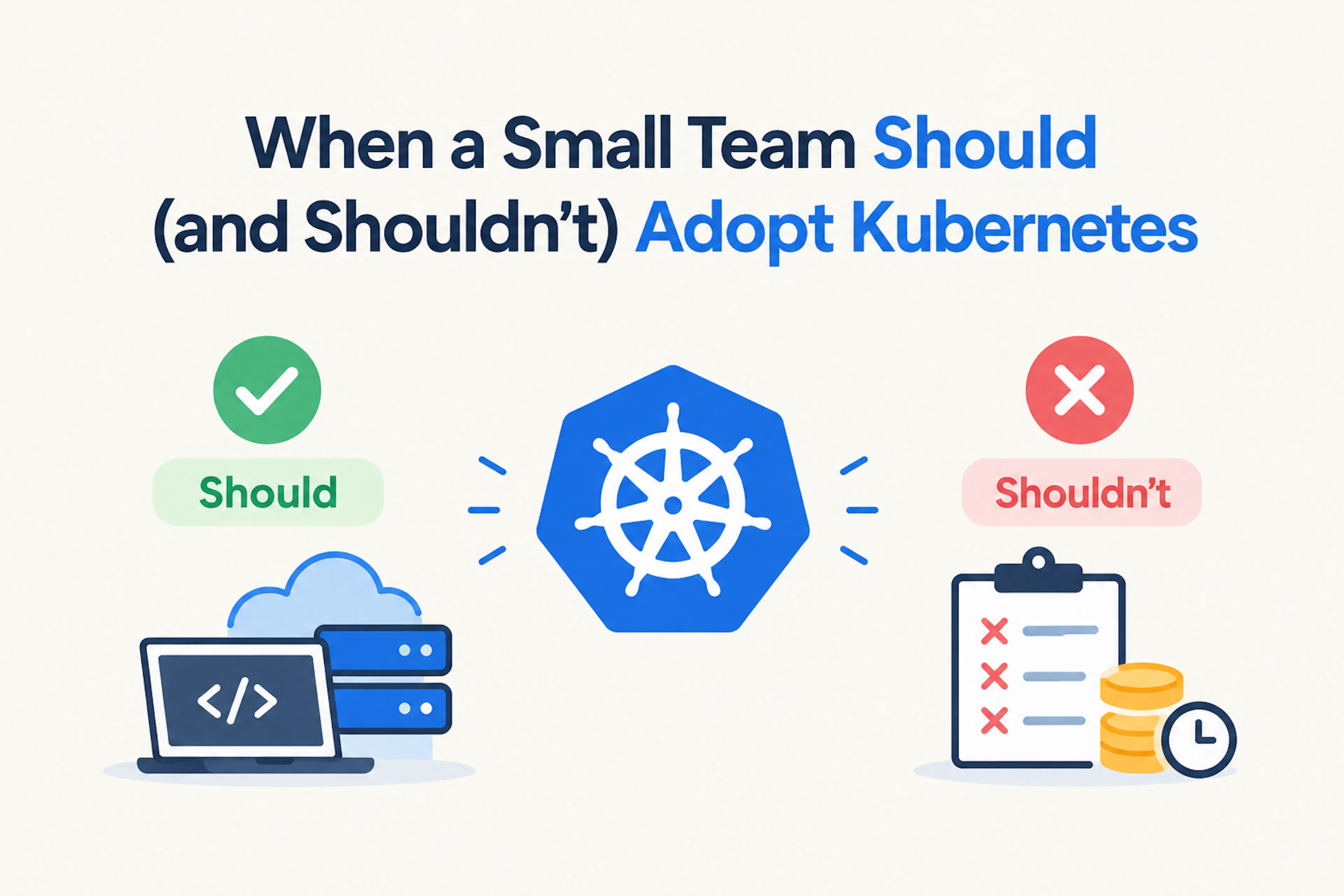
Kubernetes dominates cloud infrastructure conversations, but adopting it too early can stall a small team's progress. This post offers a practical framework to help you decide if and when Kubernetes makes sense for your organization.
What Happened
Kubernetes was built at Google scale to solve problems most small teams haven't encountered yet. For teams of three to fifteen engineers, adopting too soon wastes months of productivity, while adopting too late can leave deployments fragile and hard to manage.
Why This Matters
Kubernetes gives you container orchestration—scheduling, self-healing, rolling updates, and network management. But each feature comes with operational overhead: networking, ingress, storage, RBAC, secrets management, upgrades, monitoring, and cost control. The platform shifts work, not eliminates it.
Key Takeaways
- Scale independently: If you run a dozen or more services with different traffic patterns, Kubernetes excels at scaling each on its own.
- Zero-downtime releases: Rolling updates, readiness probes, and easy rollbacks help when you ship multiple times daily and downtime costs revenue.
- Containerization habit: Teams already building container images and running CI/CD can adopt Kubernetes more smoothly.
- Cloud portability: When customers require deployment across clouds or you want to avoid provider lock-in, Kubernetes provides a common layer.
- Team ownership: At least one person must deeply understand Kubernetes, or a reliable partner must own the cluster.
Conversely, a single application, steady traffic, no team experience, early-stage product focus, or trend-driven adoption are strong signals to stay with simpler platforms.
Conclusion
Kubernetes is a powerful tool, not a milestone. The right question isn't whether your team is big enough, but whether your problems outweigh the cost of running it. Start with a managed control plane, begin with a non-critical workload, set resource limits from day one, and invest in monitoring. Keep configuration in version control and plan regular upgrades. For many small teams, the honest answer is not yet—and that's a perfectly sound engineering decision.





Discussion
Join the conversation
Thoughtful reactions, questions, and follow-up ideas help shape the next story.