Introduction
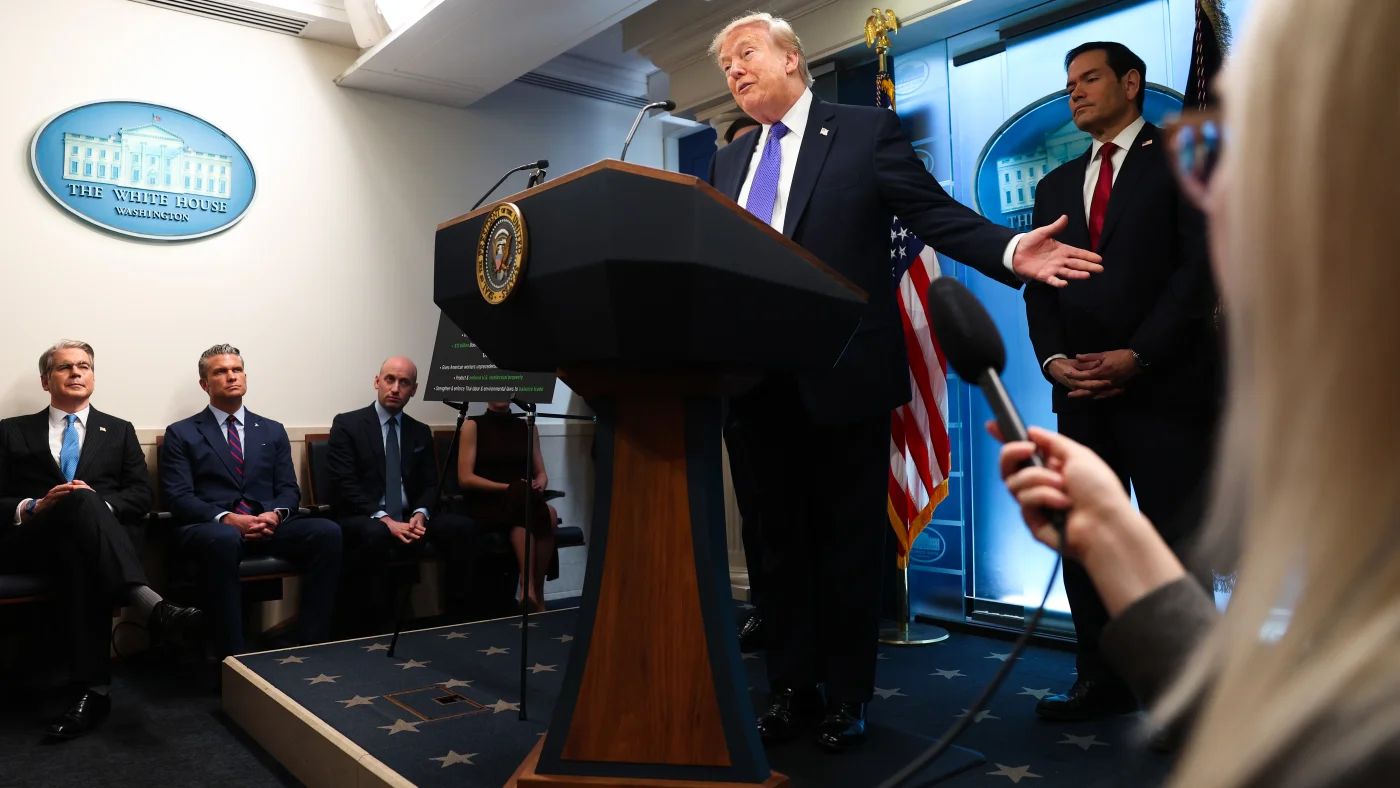
President Donald Trump is back in Washington after a high-profile tour of Asia that included sit-downs with Chinese President Xi Jinping and Russian President Vladimir Putin. At a White House news conference, Trump described the negotiations as proof of American strength, flanked by Vice President JD Vance and Secretary of State Marco Rubio. Still, the briefing offered more tone than detail, leaving the actual results of the three-way talks unclear.
What Happened
The main event took place at a lakeside resort in Shenzhen, where Trump, Xi, and Putin met around a large round table. Their discussion covered nuclear proliferation, Iran, and the current state of international relations. Trump told reporters that the United States came to the table from a position of strength.
Once back stateside, the president said he and Xi had reached an understanding on safety measures for artificial intelligence, referring to the technology as super intelligence, a term he said the Chinese president prefers. Trump also restated his view that the U.S. should only sell older-generation semiconductors to China, arguing that Beijing would simply produce its own chips if Washington cut off advanced exports.
The public record of the summit remained limited. The three governments put out a joint statement affirming unity on some issues, including ongoing talks about reducing nuclear risks, but no major agreements on trade or security were announced. Trump did not field formal questions during his time in China, while Putin held a news conference before leaving the country.
Why This Matters
Bringing together the leaders of the three nations with the largest nuclear arsenals automatically raises the stakes for global security. Dialogue on nuclear nonproliferation and regional tensions, including Iran, can influence the broader international order.
However, the absence of concrete deliverables invites skepticism. The summit produced striking visuals of great-power cooperation, but there was little sign that Xi or Putin offered significant concessions. Suzanne Maloney of the Brookings Institution said the trip allowed Trump to project an image of statesmanship after a difficult election period at home, suggesting the value of the meeting may have been more political than diplomatic.
Key Takeaways
- President Trump held trilateral talks with Xi Jinping and Vladimir Putin in Shenzhen, China.
- The agenda included nuclear risks, Iran, artificial intelligence, and broader global relations.
- Trump said the U.S. and China would establish joint guardrails for AI development.
- He wants to limit advanced chip sales to China and keep data center investment within the United States.
- Vice President JD Vance and Secretary of State Marco Rubio appeared with Trump at the White House briefing.
- Analysts characterized the summit as largely symbolic, with few binding outcomes.
Conclusion
Trump's post-trip press conference mixed familiar talking points-domestic manufacturing, the Federal Reserve, and a possible Nobel Peace Prize-with a defense of his Asia diplomacy. While the president portrayed the meetings as a success, the tangible results were thin. The episode underscores a recurring theme of his foreign policy: powerful imagery does not always produce lasting agreements.
Discussion
Join the conversation
Thoughtful reactions, questions, and follow-up ideas help shape the next story.