Introduction
College football’s newest controversy isn’t about a controversial call or a transfer portal move. It’s about a scoreboard. Illinois unveiled the largest video board in the sport this season, and its use during opposing field goal attempts has triggered a fresh debate over where the NCAA draws the line between gamesmanship and unsportsmanlike conduct.
What Happened
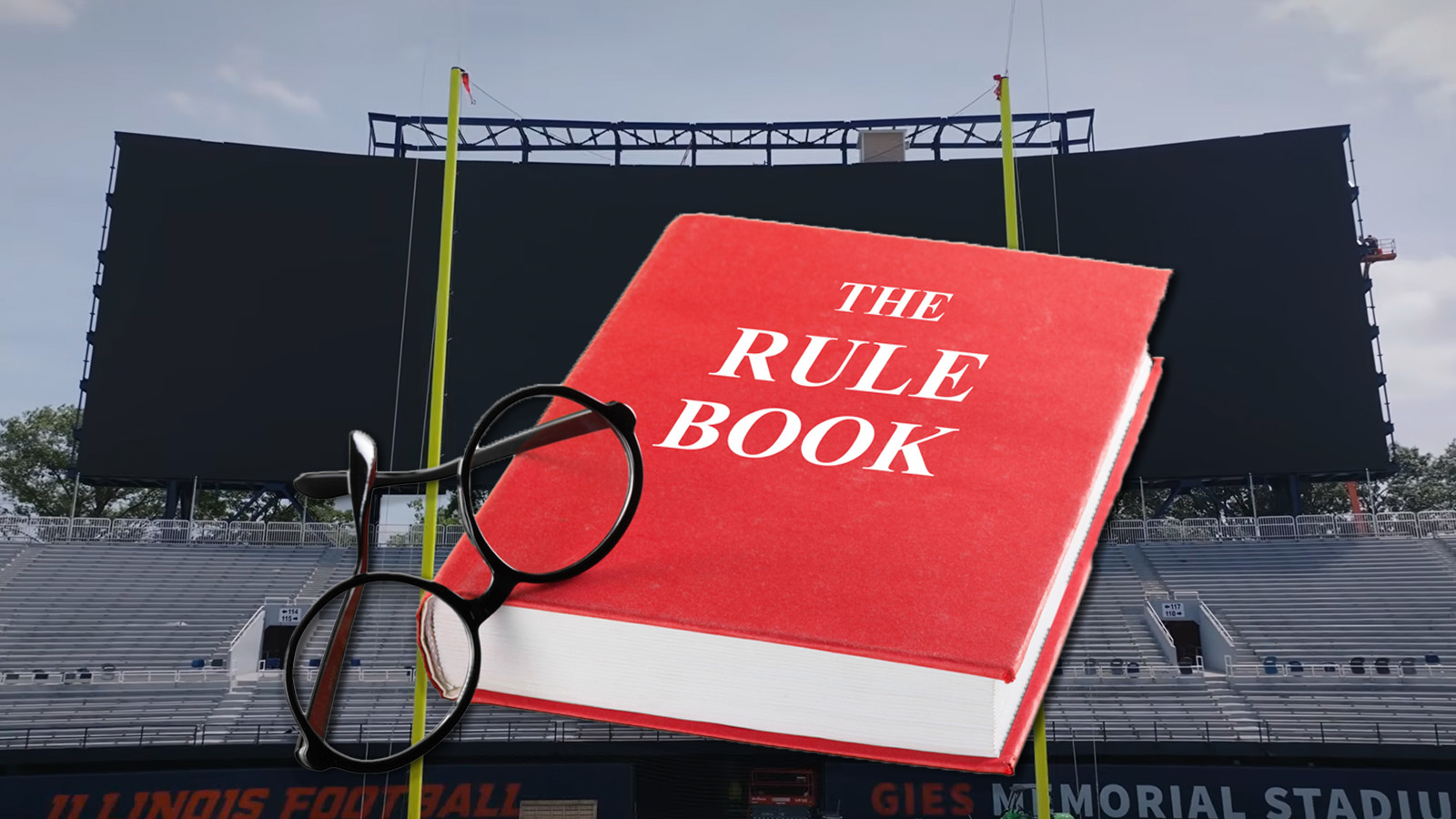
During a recent game against Nebraska, Illinois lit up its massive video board in a bright neon yellow that closely resembled the actual goal posts. Nebraska’s kicker missed the attempt, and the moment quickly went viral. The display was part of a sponsored promotion tied to McDonald’s, specifically designed to appear when the opposing team lines up for a kick.
This isn’t the first time a school has tried to disrupt a kicker’s focus. Miami University was flagged for unsportsmanlike conduct after displaying a graphic of three fake uprights behind the goal posts during a rivalry game against Ohio. Indiana used a similar tactic earlier in the season against North Texas but was not penalized. Other programs, including Coastal Carolina, Maryland, and Marshall, have experimented with humorous graphics ranging from cartoon characters to pop-culture references.
NCAA Rule 9, Section 2 prohibits anyone subject to the rules—including video board operators—from creating noise or distractions that obstruct play. Miami’s penalty showed the rule can be enforced, but the inconsistent application across conferences has left coaches and fans asking where the boundary actually sits.
Why This Matters
The inconsistency matters because it affects competitive fairness. If one team is penalized for a visual distraction while another escapes punishment for the same behavior, the rule loses credibility. Coaches like Miami’s Chuck Martin have publicly questioned the standard, suggesting that some distractions are simply part of the game’s entertainment value.
For Illinois, the stakes are higher because of the board’s sheer size and visibility. A neon yellow screen that mimics the uprights is harder to dismiss as a harmless joke, especially when it coincides with a missed kick in a close game. The situation forces the NCAA and conference officials to decide whether sponsored, stadium-wide visuals fall under the same umbrella as traditional unsportsmanlike conduct.
Key Takeaways
- Illinois operates the largest video board in college football and has used it during opposing field goal attempts.
- A neon yellow display resembling goal posts was shown during a Nebraska kick, which was missed.
- Miami University received an unsportsmanlike conduct penalty for a similar video board distraction against Ohio.
- Indiana used a comparable tactic against North Texas without being flagged, highlighting uneven enforcement.
- NCAA rules prohibit distractions that obstruct play, but officials have not applied the standard consistently.
Conclusion
Illinois’ video board has turned a routine extra point or field goal into a flashpoint for a larger conversation about sportsmanship and technology in college football. Until the NCAA clarifies exactly when a graphic becomes an illegal obstruction, teams will keep testing the limits—and officials will keep facing criticism for how they draw the line.
Discussion
Join the conversation
Thoughtful reactions, questions, and follow-up ideas help shape the next story.