Introduction
Enterprise AI agents operate across disconnected systems, each holding a fragment of the customer picture. When these fragments contradict, agents can reach dangerously wrong conclusions — not because of hallucination, but because of unresolved assertion conflicts.
What Happened
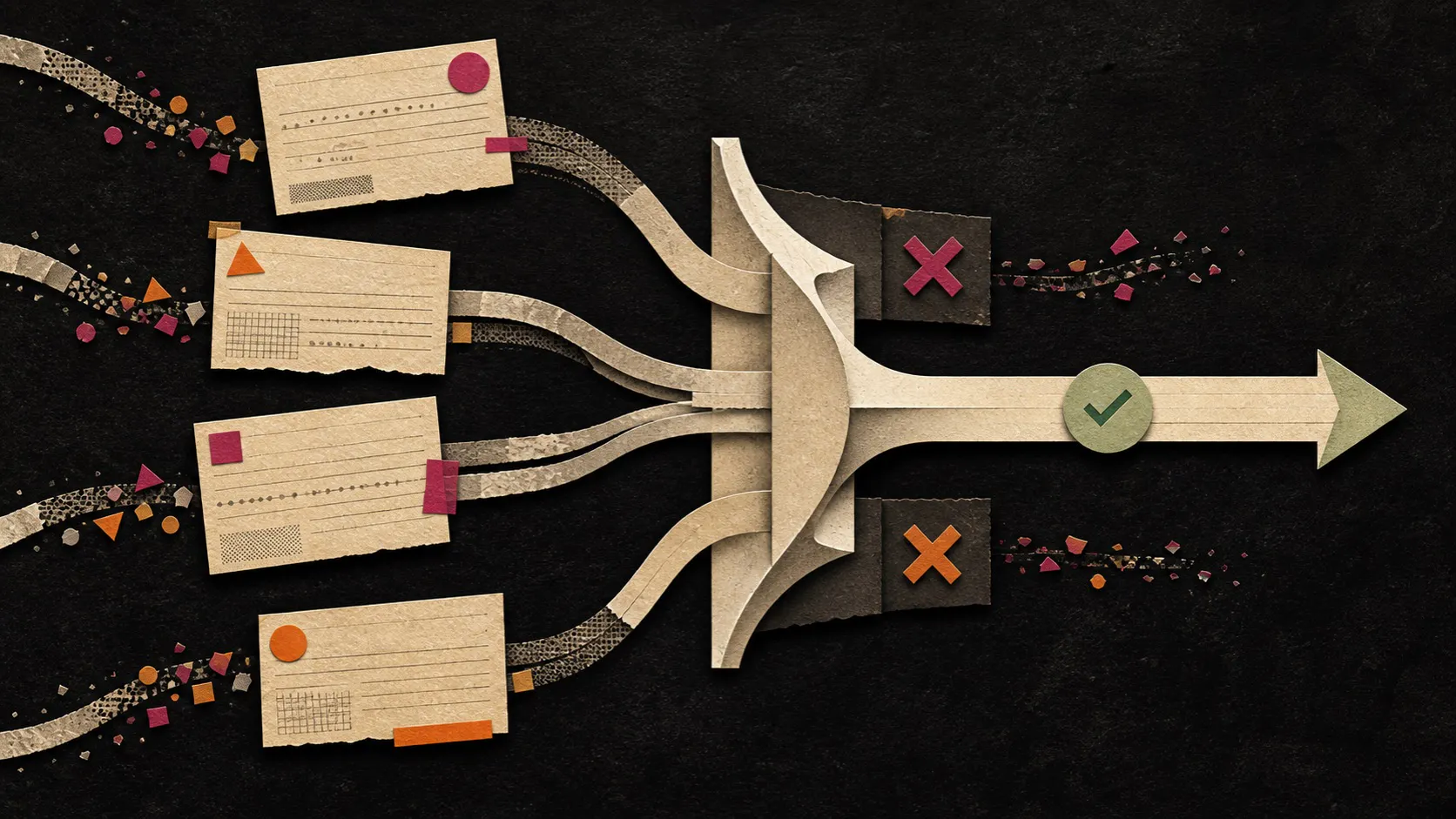
A revenue agent tasked with following up on a returning account encounters a patchwork of signals: the CRM flags the deal as active, product analytics reports high intent, billing confirms current status, support shows an open escalation, consent blocks marketing, and territory assignment shifts ownership. Each system speaks the truth within its domain, but compressing them into one answer creates a resolution failure.
Why This Matters
The core problem is not data accuracy — it is data coherence. An assertion is a claim rooted in source, time, and policy. When multiple assertions govern the same action, the system must resolve which, if any, authorizes proceed. The conflict graph framework introduces deterministic gates — identity, authority, freshness, policy, consequence — to prevent unauthorized or non-compliant actions before execution.
Key Takeaways
- An assertion carries provenance, authority, and effective time; a field value does not.
- Five filtering gates — identity, authority, freshness, policy, consequence — screen claims before any action.
- Freshness matters: a stale CRM owner field may be outranked by a newer territory assignment.
- Policy gates block actions when consent or compliance is denied, regardless of confidence scores.
- Consequence gates escalate high-risk decisions; low-risk actions may proceed automatically.
- Deterministic resolution must precede probabilistic reasoning.
- Metrics like unresolved conflict rate and stale assertion rate reveal whether the control layer is working.
Conclusion
AI agents need more than context — they need admissible, provenance-rich context processed through explicit rules. The conflict graph framework gives teams a way to compose authoritative claims without erasing conflict, enabling safer, governed autonomous decisions. Without it, every agent run risks blending incompatible truths into unauthorized actions.








Discussion
Join the conversation
Thoughtful reactions, questions, and follow-up ideas help shape the next story.