Introduction
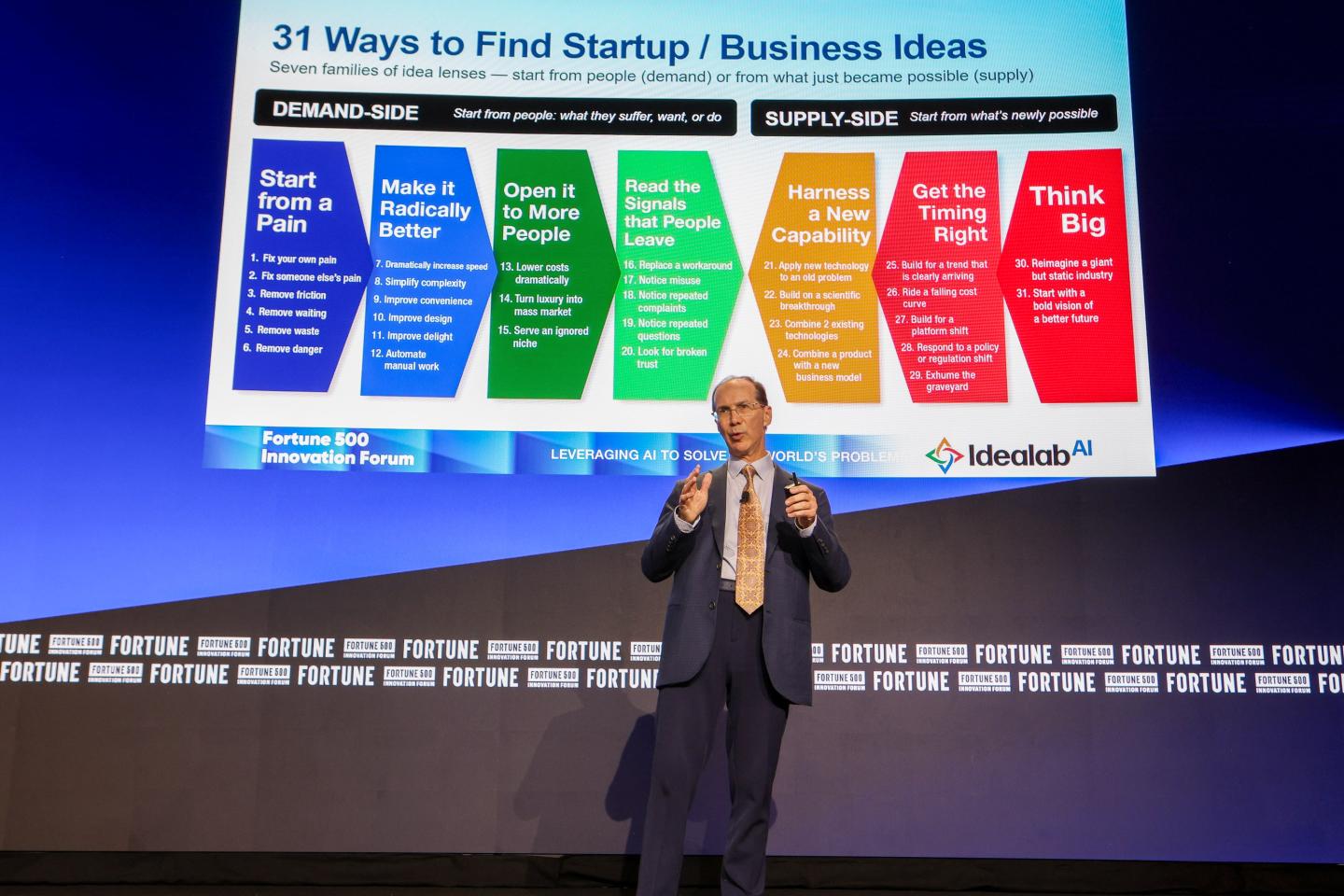
Bill Gross, the founder of Idealab, made headlines by releasing 1.2 million AI-generated business concepts to the public at no cost. Now he is flipping the model: he wants major corporations to pay a six-figure annual fee to apply that same artificial intelligence engine to their own internal patent portfolios. Gross outlined the proposal at the Fortune 500 Innovation Forum in Detroit, framing it as a way for large companies to unlock value from intellectual property that has been sitting unused.
What Happened
Gross launched Idealab.ai in October. The system was trained on roughly two decades of news coverage, patents dating back to 1980, product recalls, user complaints from Reddit and X, and 31 of his own ideation techniques. After about a month and approximately $1 million in computing costs, the platform produced 1.2 million ideas. Since then, 131,000 people across 202 countries have searched the database.
At the Detroit forum, sponsored by Idealab.ai, Gross told executives that the real input should not be external news but their own proprietary assets—patents, trade secrets, and shelved research. He is offering a full corporate license for $250,000 per year, with a discounted one-year pilot available to five companies for $25,000 each.
To demonstrate the concept, Gross worked with Caltech, where he serves as an alumnus and trustee. He initially requested four patents from the university’s tech-transfer office, but officials offered the entire portfolio. The AI processed 9,978 patents and returned 3,867 potential businesses that Caltech could build or license. For comparison, Caltech’s tech-transfer office recorded 59 licenses and options and helped launch eight startups in fiscal 2024.
Idealab also analyzed the public patents of 113 companies attending the forum and gave each attendee a one-page list of business ideas they were not currently pursuing. Gross said the ultimate goal is to gain access to non-public corporate information.
Why This Matters
Large firms accumulate vast patent libraries, but research indicates those patents are far less likely to lead to new product launches than those held by smaller companies. Academics from Kellogg, Yale, and the Atlanta Federal Reserve matched about 1.4 million products to patents and found that big businesses often use intellectual property defensively to block rivals rather than to commercialize new offerings. In other words, some shelved research stays on the shelf by design.
Gross’s pitch hinges on whether AI can change that calculation. By charging well-funded corporations, he says he can keep the public version free for entrepreneurs. He compared his vision to Thomas Edison’s invention laboratory and quoted Edison’s line about identifying what the world needs before inventing it. The open question is whether corporate R&D departments will pay a quarter-million dollars to have an algorithm tell them what their own patent filings already suggest.
Key Takeaways
- Idealab.ai released 1.2 million free AI-generated business ideas and attracted users in 202 countries.
- Bill Gross is now licensing the system to corporations for $250,000 per year, with a $25,000 pilot option for five companies.
- A Caltech test run produced 3,867 potential businesses from nearly 10,000 university patents.
- Research shows large companies often hold patents defensively rather than turning them into products.
- Gross plans to use corporate license fees to subsidize free access for independent entrepreneurs.
Conclusion
The experiment raises a pointed question for corporate leaders: if your company has spent years building a patent library, do you know what is actually inside it? Gross is betting that many executives will pay for an AI-powered audit of their own intellectual property. Whether Fortune 500 R&D teams see the value—or prefer to keep their patents as defensive assets—remains to be seen.
Discussion
Join the conversation
Thoughtful reactions, questions, and follow-up ideas help shape the next story.