Introduction
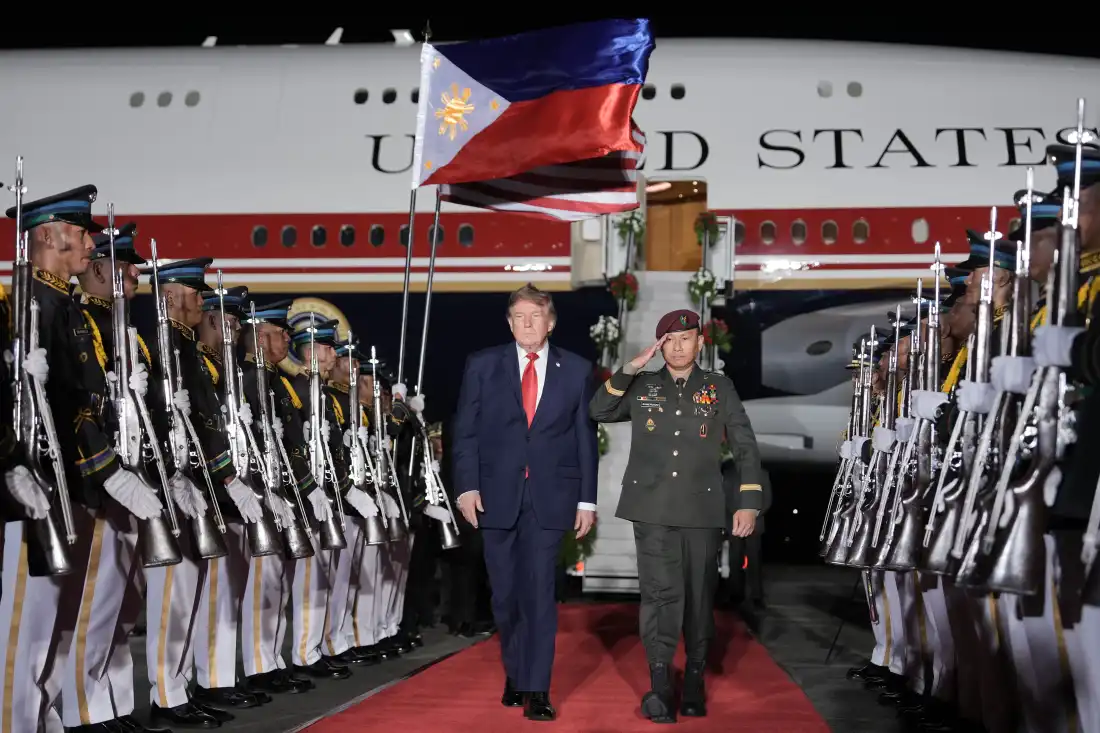
President Donald Trump has landed in Manila to begin a three-day swing across Asia, marking his first international trip since his party's midterm election losses. The visit opens with ceremonial welcomes in the Philippine capital before moving toward high-stakes discussions on trade, security, and nuclear diplomacy with some of the world's most influential leaders.
What Happened
Touching down at Ninoy Aquino International Airport on Tuesday, Trump was greeted by an honor guard, a marching band, and a child presenting small American and Philippine flags. He waved the flags in wide circles as he headed toward a waiting helicopter.
In Manila, Trump is set to attend the Association of Southeast Asian Nations (ASEAN) summit as the guest of honor at a gala dinner. His agenda includes a meeting with the Quad nations—the United States, Australia, India, and Japan—and the signing of a trade agreement with Thailand. That deal builds on an October framework under which Thailand would lower tariffs on American goods and purchase billions in U.S. aircraft, farm products, and liquefied natural gas. The arrangement follows legal and policy shifts over tariffs, including a Supreme Court decision that struck down an earlier levy on Thai goods.
On Wednesday, the president is scheduled to receive a red-carpet welcome and full military honors from Philippine President Ferdinand Marcos Jr., followed by a state banquet at Malacanang Palace. The two leaders are expected to reaffirm their mutual defense alliance, and officials are arranging a possible brief meeting with former first lady Imelda Marcos, now 97, if her doctors approve.
Meanwhile, roughly 1,500 left-wing demonstrators gathered in downtown Manila to protest the visit, waving red flags and calling for an independent Philippine foreign policy. Riot police stood by as protesters burned an effigy and demanded that the Marcos administration stop taking cues from Washington.
Why This Matters
The trip arrives at a delicate moment for the administration. Trump is traveling abroad after recent setbacks at home, including disruption in the U.S. aviation industry and the departure of Nvidia's Jensen Huang amid a scandal involving an alleged Chinese intelligence agent—a claim Beijing denies. The Asia tour offers a chance to reset the narrative and project strength on the global stage.
Regional security is also front and center. ASEAN leaders are negotiating a non-aggression pact with China concerning the South China Sea, a vital trade route where confrontations between Chinese and Philippine vessels have escalated. The United States has rejected China's expansive maritime claims and maintains a treaty obligation to defend the Philippines if its forces come under armed attack.
Key Takeaways
- Trump's Asia tour begins in the Philippines and includes stops in China and possibly North Korea.
- He will attend the ASEAN summit and meet with Quad leaders to discuss countering China's influence.
- A new trade deal with Thailand is expected, covering autos, agriculture, pharmaceuticals, and aircraft purchases.
- Nuclear negotiations involving the United States, China, and Russia are planned during the China leg of the trip.
- Protests in Manila highlight domestic opposition to close U.S.-Philippine ties.
- Trump may meet with former first lady Imelda Marcos during a state visit to Malacanang Palace.
Conclusion
From the tarmac in Manila to the negotiating tables in Beijing, Trump's Asia trip blends personal diplomacy with hard-nosed trade and security objectives. He is also expected to announce commercial deals in aviation, defense, energy, and technology before heading to China for the Asia-Pacific Economic Cooperation summit. Whether the tour can deliver lasting agreements—and provide a political boost after a difficult election cycle—remains to be seen.
Discussion
Join the conversation
Thoughtful reactions, questions, and follow-up ideas help shape the next story.