Introduction
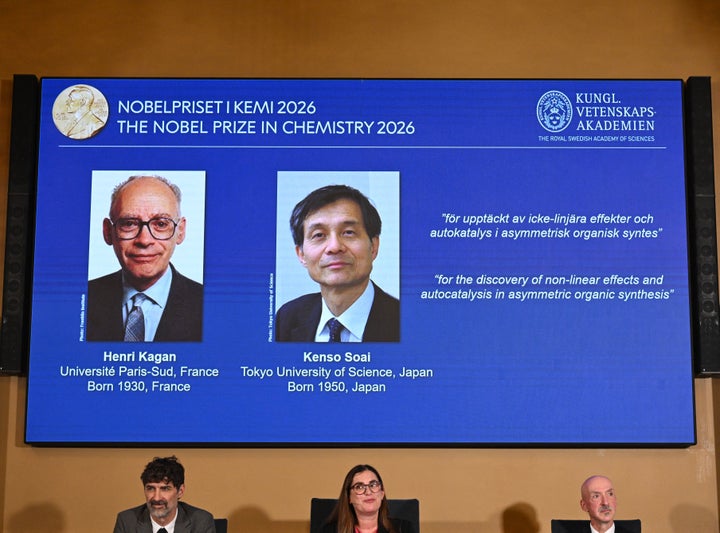
The 2026 Nobel Prize in Chemistry has been awarded to two pioneering scientists whose work resolved a long-standing question about how molecular asymmetry arises naturally.
What Happened
The Royal Swedish Academy of Sciences announced that Henri Kagan and Kenso Soai received the honor for their discoveries in non-linear effects and autocatalysis within asymmetric organic synthesis. Their research demonstrates how chemical reactions can spontaneously produce a single chiral form.
Why This Matters
Understanding how homochirality emerges has broad implications for drug development, materials science, and the study of life's molecular foundations. Most biologically active molecules exist in one chiral configuration, and the findings offer new pathways to synthesize single-enantiomer compounds more efficiently.
Key Takeaways
- Kagan, at 95 years old, and Soai uncovered the mechanism behind spontaneous chiral amplification.
- Their work explains how non-linear effects amplify small imbalances into complete molecular handedness.
- The discovery could improve manufacturing of pharmaceuticals and reduce waste in chemical production.
- The prize includes 12 million Swedish kronor, approximately $1.2 million.
Conclusion
Kagan and Soai's achievement marks a significant advance in chemistry, providing both fundamental insight and practical tools for controlling molecular structure. Their legacy will shape research and industry for decades to come.



Discussion
Join the conversation
Thoughtful reactions, questions, and follow-up ideas help shape the next story.