Introduction
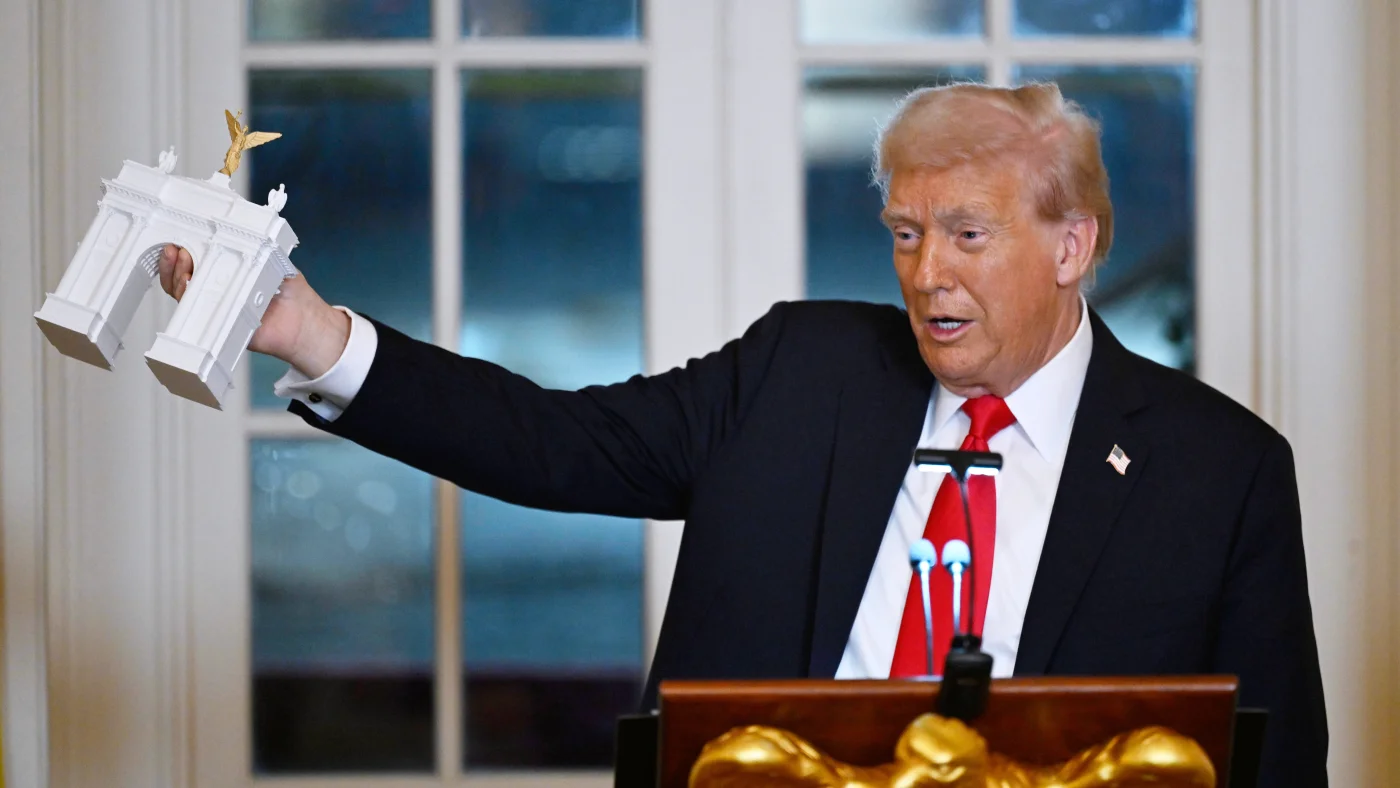
A second federal judge has moved to block President Donald Trump's proposed triumphal arch near Arlington National Cemetery, dealing the project another significant legal setback just days after a similar ruling in Washington, D.C. The Virginia-based decision would halt construction indefinitely while the county's lawsuit proceeds through the courts.
What Happened
District Judge Leonie Brinkema, sitting in Virginia, indicated during a Friday hearing that she would grant a preliminary injunction requested by Arlington County. The county filed its lawsuit in October, arguing that the 250-foot structure planned for Memorial Circle would create serious risks for local residents and emergency responders. Democracy Forward, the nonprofit legal group representing Arlington, confirmed the ruling in a statement shared with NPR.
The proposed arch would sit on the Virginia side of the Potomac River, close to both Arlington National Cemetery and Ronald Reagan Washington National Airport. Arlington County officials say the monument would increase noise and air pollution, clog roads needed by ambulances and fire trucks, and disrupt historic sightlines between the cemetery and the National Mall. The county also pointed out that the cemetery conducts roughly two dozen funerals every weekday, and that local emergency units have already responded to about 200 incidents in the surrounding area over the past two months.
Judge Brinkema, an appointee of former President Bill Clinton, told lawyers in court that she did not see "any way" the federal government could win the case on its merits. She described the administration's environmental and economic review as rushed and inadequate, particularly regarding construction cranes that would stand taller than the arch itself and affect nearby airspace.
Why This Matters
The ruling is the second judicial rebuke of the arch project within a week. On Wednesday, D.C. District Judge Tanya Chutkan extended a temporary restraining order preventing groundbreaking through at least December 3 while she weighs the underlying legal arguments. That case was brought by a coalition including Vietnam War veterans and has since been joined by the governments of D.C. and Virginia, along with nine members of the Kennedy family.
Legal experts and local officials say the dispute raises broader questions about presidential authority, congressional approval, and federal environmental review. The Trump administration has not sought congressional authorization for the monument. Instead, it has pointed to a 1925 law that authorized two much shorter columns at the same location—columns that were never built. Both judges have expressed skepticism about that legal theory.
The Justice Department said it will appeal Brinkema's decision immediately. A White House spokesperson earlier told NPR that the administration remains confident it will ultimately be vindicated and described the arch as a "beautiful and fitting monument."
Key Takeaways
- A Virginia federal judge plans to issue a preliminary injunction blocking construction of Trump's proposed 250-foot triumphal arch indefinitely.
- Arlington County sued in October, citing risks to emergency services, noise, air pollution, and disruptions to funerals at Arlington National Cemetery.
- This is the second court ruling against the arch this week; a D.C. judge previously extended a construction pause through early December.
- The project lacks congressional approval, and the administration's reliance on a 1925 law has drawn skepticism from both judges.
- The Justice Department intends to appeal, while the White House says it expects to prevail in court.
Conclusion
For now, construction of the proposed triumphal arch remains on hold. With two federal judges expressing serious doubts about the administration's legal arguments and environmental review, the project faces a prolonged court battle. Arlington County and its allies say the pause is necessary to protect public safety and historic spaces, while the Trump administration vows to continue fighting to build the monument. The outcome could set an important precedent for how future presidential projects are reviewed and approved.
Discussion
Join the conversation
Thoughtful reactions, questions, and follow-up ideas help shape the next story.